Maserati Hands You a Key
Maserati, the Modena carmaker founded in 1914 and now part of the Stellantis group, announced on November 2 that it is moving into branded residences with a project called Casa Maserati. A branded residence is, in plain terms, a home that carries a famous name: the brand licenses its identity, and a developer builds and sells the apartments. The news arrives in the centenary year of the Trident, the emblem created in 1926, and comes with a reassuring amount of poetry and a notable lack of detail. No location, developer, architect or price has been named. The company says only that the first projects and partners will be unveiled soon.
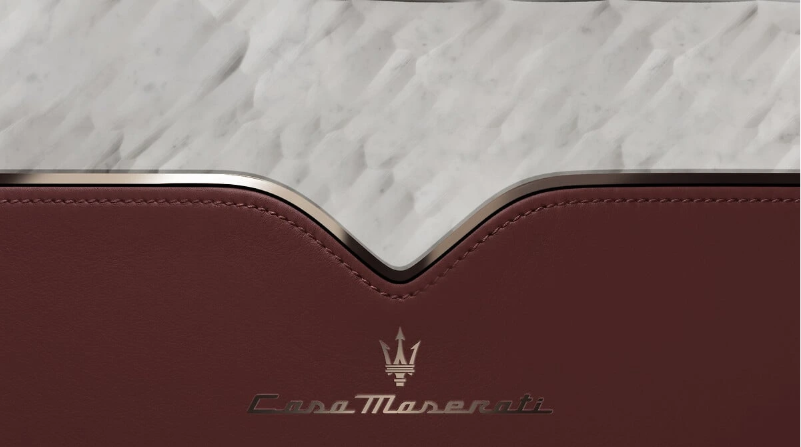
What Maserati says it is building
The pitch is that “Italian Gran Turismo” can be lived in as well as driven: transforming, in the company’s words, the pleasure of driving into the pleasure of experiencing the spaces we inhabit. The design language is promised to be sculptural forms, harmonious proportions, fine materials and careful use of light, and the services are described as hospitality that embraces wellness, culture and taste. The head of design, Klaus Busse, frames it through the three principles he applies to cars: performance, presence and provenance. Santo Ficili, chief executive of Maserati and Alfa Romeo, calls it a natural extension of the brand’s world.
Maserati also makes a business claim: that branded residences are one of the most significant trends in contemporary luxury, driven by clients who want a sense of belonging and an identity they recognise, and that a home’s value is increasingly tied to the brand behind it.
The neighbours
Maserati is not first through the door. Porsche Design Tower in Sunny Isles Beach, Miami, completed in 2017, started the car-condo craze with its car elevators that deliver vehicles to in-unit garages. Aston Martin Residences, a 66-story Miami tower completed in 2024, has 391 units, 99 percent of which Aston Martin says were sold before completion. Bentley Residences, a 61-story building by the same developer as the Porsche tower, is due around 2027 to 2028. Bugatti has a project in Dubai with the developer Binghatti and another planned on the Miami River, Mercedes-Benz has Dubai towers with Binghatti (a Brickell, Miami project has reportedly stalled), and Pagani has residences planned in North Bay Village. Porsche Design is now taking the idea beyond towers, with the car-collector clubhouses we covered recently. In other words, Miami and Dubai are crowded with Italian, German and British badges.
If the pattern holds, those two cities are obvious candidates for Maserati’s first project. But the company has said nothing, so that is speculation.
Between the lines
The model is asset-light. As with the Ritz-Carlton’s plans for Brooklyn Heights or Mandarin Oriental’s collection of private homes, the brand supplies a name and standards while somebody else carries the construction cost and risk. For a carmaker, it is a way to earn from a brand without building another factory. The point to watch is who runs the building after the opening, because a name on the door does not deliver service. Maserati has not said which hospitality partner it will use.
Timing makes it more interesting. According to Hagerty, Maserati sold fewer than 8,000 cars worldwide in 2025, down from about 25,000 in 2022 and about 50,000 in 2017, and its own marketing chief has spoken of an identity crisis. Stellantis’s chief executive said at the Paris Motor Show this autumn that Maserati is not for sale, and the brand has reappointed Ficili and promised new models by the end of the decade. Seen one way, Casa Maserati is a smart diversification: brand value can earn money even when cars are scarce. Seen another, it is a lifestyle project launched while the core business is still being repaired, with a risk that the home has to carry more of the brand than the car currently does.
Compare it with Brunello Cucinelli, which we covered recently: a house with growing sales and a clear point of view can extend its universe from strength. A brand extending from a position of weakness has to be more careful, because a poor residential project would hurt the Trident twice.
The Map to Modern Luxury
THE CURATED CALENDAR
Discover the world’s most prestigious gatherings & exhibitionsCars and homes do different jobs. The Porsche and Bentley towers are built around the car, with lifts and garages. Mercedes-Benz leans toward a broad design language. Maserati’s text mentions no garages at all and speaks of wellness, culture and taste, which suggests a more domestic, Italian-hospitality tone, though it also references Fuoriserie, its customisation programme, so personalised interiors would not be surprising.
A crowded market has losers too. If the Miami skyline has taught us anything, it is that a famous badge does not guarantee that a tower sells, and that those premiums vary widely and are often quoted by interested parties. The sensible reading is that branded residences work when the developer, location and operator are as strong as the name.
Where it points
Luxury brands increasingly see real estate as the longest-lasting way to occupy a customer’s life, and Casa Maserati is another sign. The questions to ask when the first project appears are plain ones. Who is building it, who is running it, where is it, and what will it offer that a good Italian architect and a good hotelier could not offer without a Trident?
For now, the best thing about the announcement is the symbolism: a company whose logo was inspired by the Fountain of Neptune in Bologna is asking people to live beside it. It remains to be seen whether the address is worth the key.
