In the language of Japanese tradition, “hakuba” means white horse — an animal of grace, power, and rare beauty. It is a name that fits perfectly. In just two years of existence, the Japanese restaurant Hakuba at the Cheval Blanc Paris hotel has gone from celebrated newcomer to two-starred destination, earning its second Michelin star at the MICHELIN Guide France & Monaco 2026 ceremony held on March 16 in Monaco. It is one of the most talked-about promotions of the year, and few who have dined at this singular counter would dispute it.
TOKYO MEETS PARIS — AND THE RESULT IS SUBLIME
When Cheval Blanc Paris unveiled Hakuba in March 2024, it sent a ripple through the city’s dining world. The opening completed a remarkable culinary universe at one address: the legendary three-Michelin-starred Plénitude, the chic brasserie Le Tout-Paris, the Milanese-inspired Langosteria, and now a kaiseki-sushi counter of the highest order.
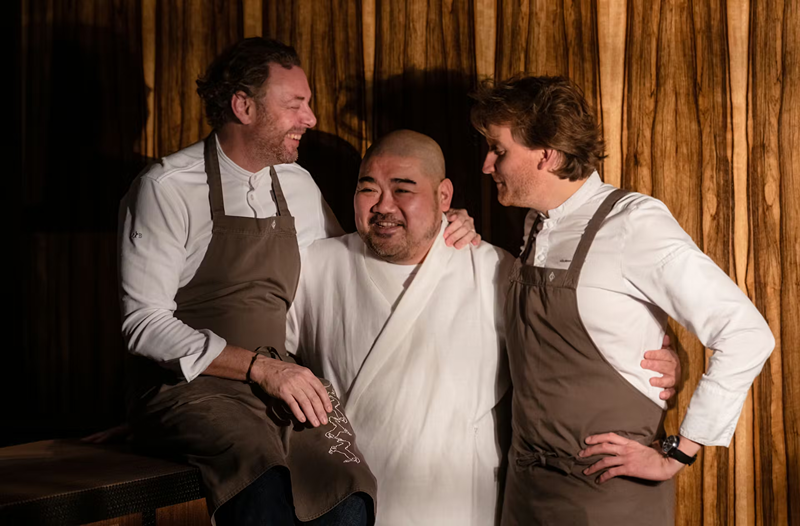
Hakuba is not the work of a single chef, but a rare and inspired three-way collaboration. At its heart is Japanese sushi master Chef Takuya Watanabe, a figure of quiet genius who was already behind the celebrated one-Michelin-starred restaurant Jin in Paris before launching Mayfair Taku in London in 2022. Working alongside him is Arnaud Donckele — the culinary director of Cheval Blanc Paris and holder of three Michelin stars at Plénitude and at La Vague d’Or in Saint-Tropez — who brings his legendary mastery of sauces, broths, and jus to elevate each Japanese course with extraordinary French finesse. Rounding out the trio is pastry chef Maxime Frédéric, whose dessert work has been described simply as unmissable in what is normally a format where sweets barely register.
The result? A restaurant that Michelin inspectors, food journalists, and diners unanimously describe as one of the greatest Japanese dining experiences in the world outside of Japan itself.
WHAT IS OMAKASE — AND WHY DOES IT MATTER HERE?
“Omakase” translates, more or less, as “I’ll leave it up to you.” At Hakuba, that trust is richly rewarded. The menu changes with the seasons and the daily catch, meaning no two visits are ever quite the same — and every dish carries the quiet confidence of chefs who have nothing to prove and everything to express.
The cuisine is best described as kaiseki-sushi: a fusion of the formal, multi-course kaiseki tradition with the precision and intimacy of a sushi counter. Chef Watanabe — who grew up on Japan’s northernmost island of Hokkaido, where his grandfather was a market gardener who taught him to understand seasonality and respect for ingredients — brings this philosophy to every single piece he prepares. Fish so fresh it seems to dissolve. Acidity perfectly calibrated. Temperature controlled with near-surgical care.
The supporting cast of flavors is where Donckele makes his artistry felt. Shellfish dashi, sweet garlic purée, green shiso coulis, and deep, concentrated broths arrive to accompany the sushi, introducing a dimension that has no equivalent in the Japanese omakase tradition. These sauces do not impose — they whisper, elevate, and harmonize.
Diners seated at the counter — the only way to experience Hakuba — watch the chefs move between three parallel counters, preparing each piece with balletic precision. Reviewers consistently describe the atmosphere as meditative, the silence between bites deliberate, the service a masterclass in Japanese omotenashi (wholehearted hospitality).
ON THE MENU: WHAT TO EXPECT
Hakuba offers two tasting menus, both strictly omakase in format:
— SHUNKAN (Lunch): A lunch menu centered on fresh seafood and expertly crafted fish preparations. Priced at €180 per person.
— YUME (Dinner): The full evening experience, a deep immersion into kaiseki-sushi cuisine. Priced at €380 per person, or €420 in the “Temaki Caviar” signature version, which features luxurious caviar temaki as a highlight course.
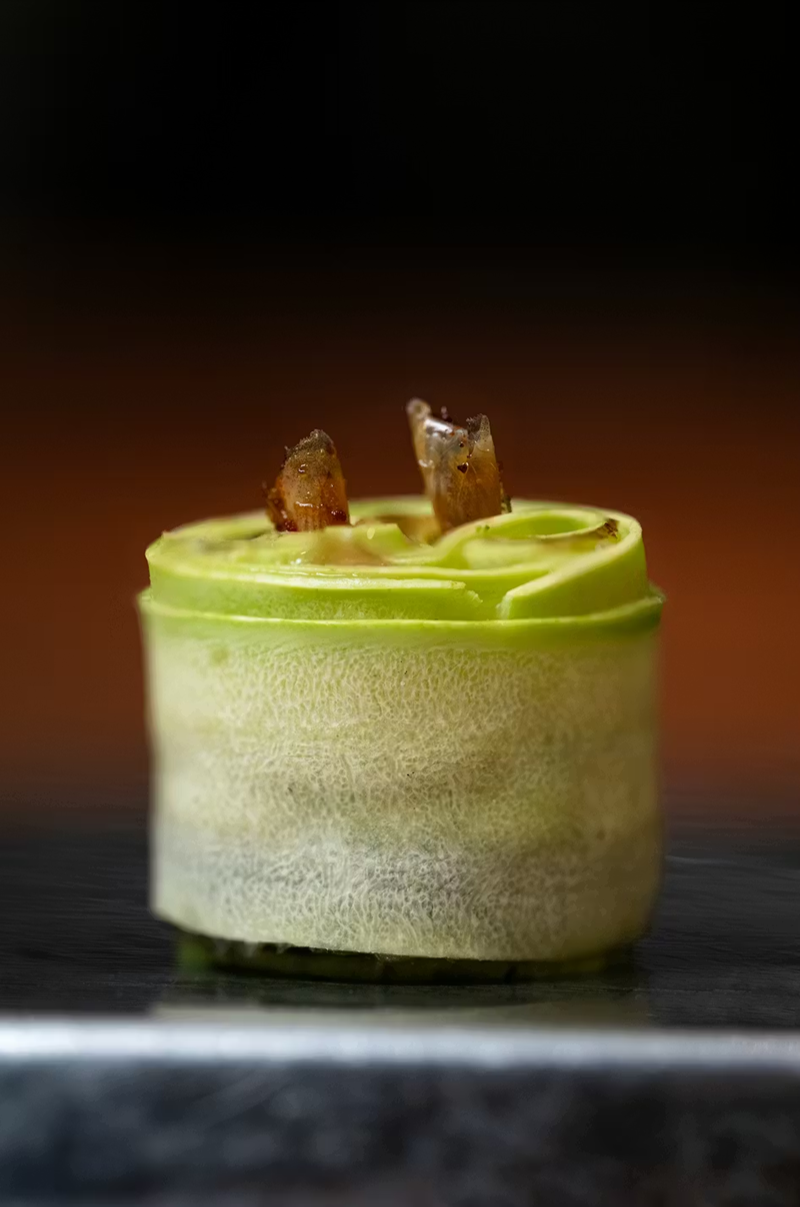
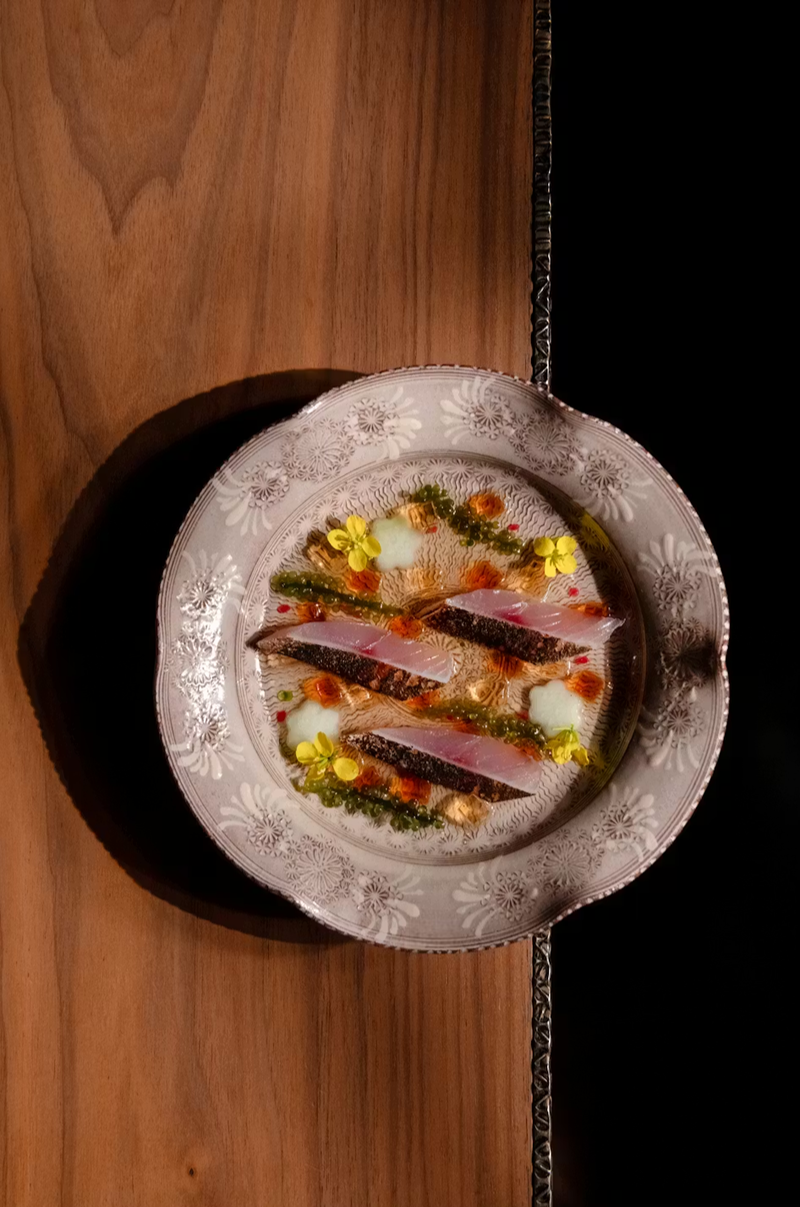
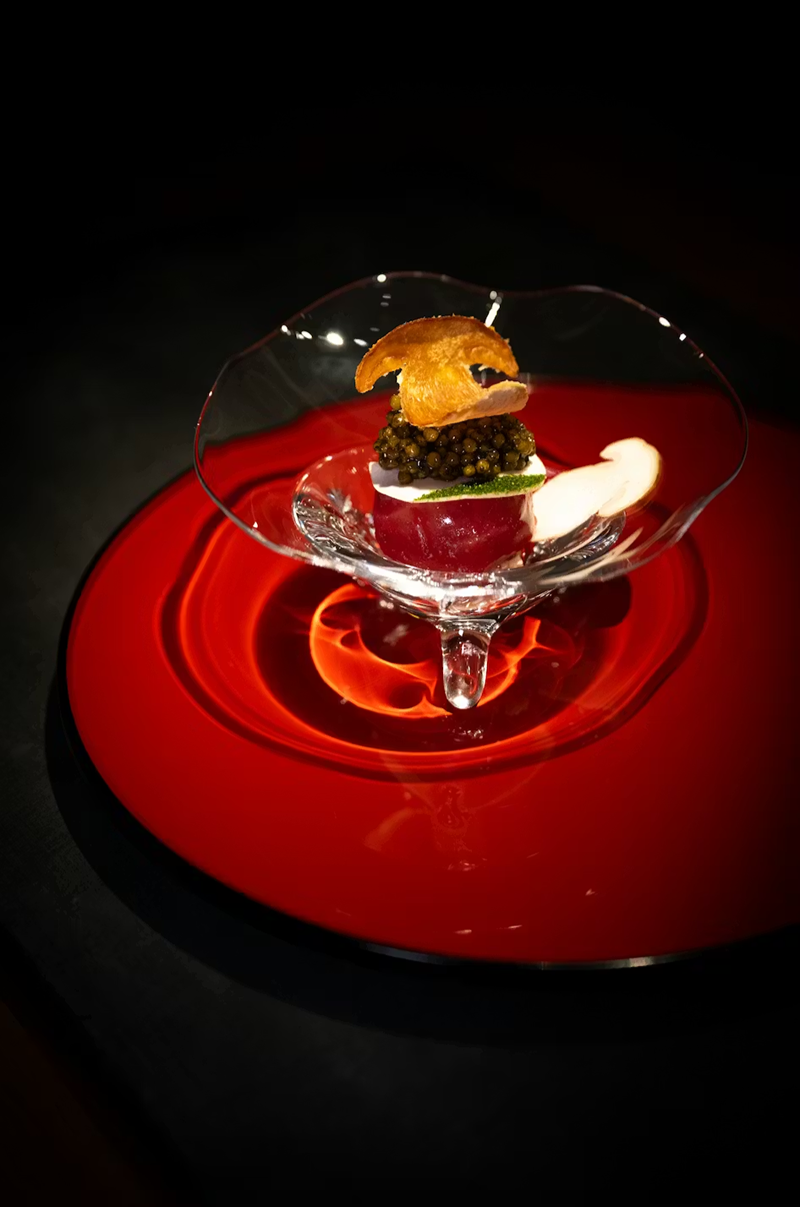
Courses typically include a progression of carefully composed starters and soups, a cascade of nigiri sushi prepared in front of diners, raw and caramelized fish, seasonal soba, and signature preparations featuring ingredients such as sea bream, abalone, squid, and bluefin tuna. Lemon caviar, miso-glazed fish, and Donckele’s distinctive sauces make regular appearances, punctuating the meal with moments of extraordinary intensity.
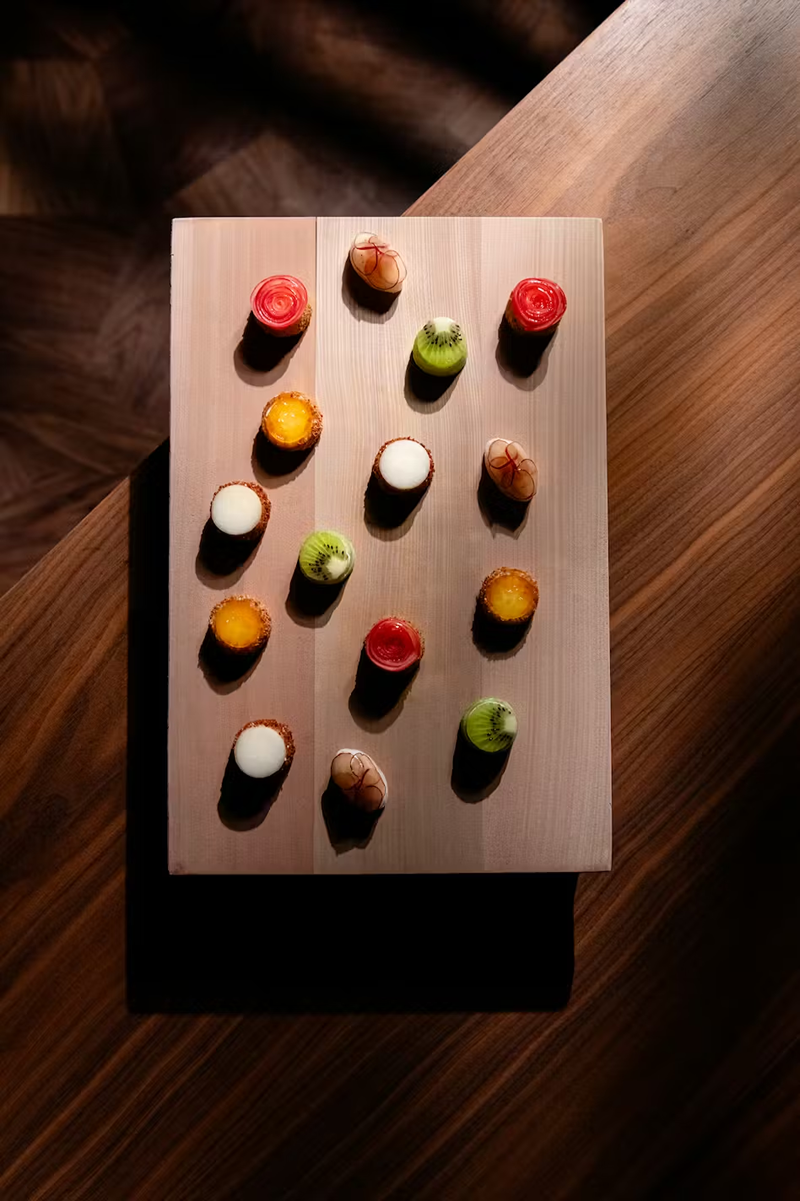
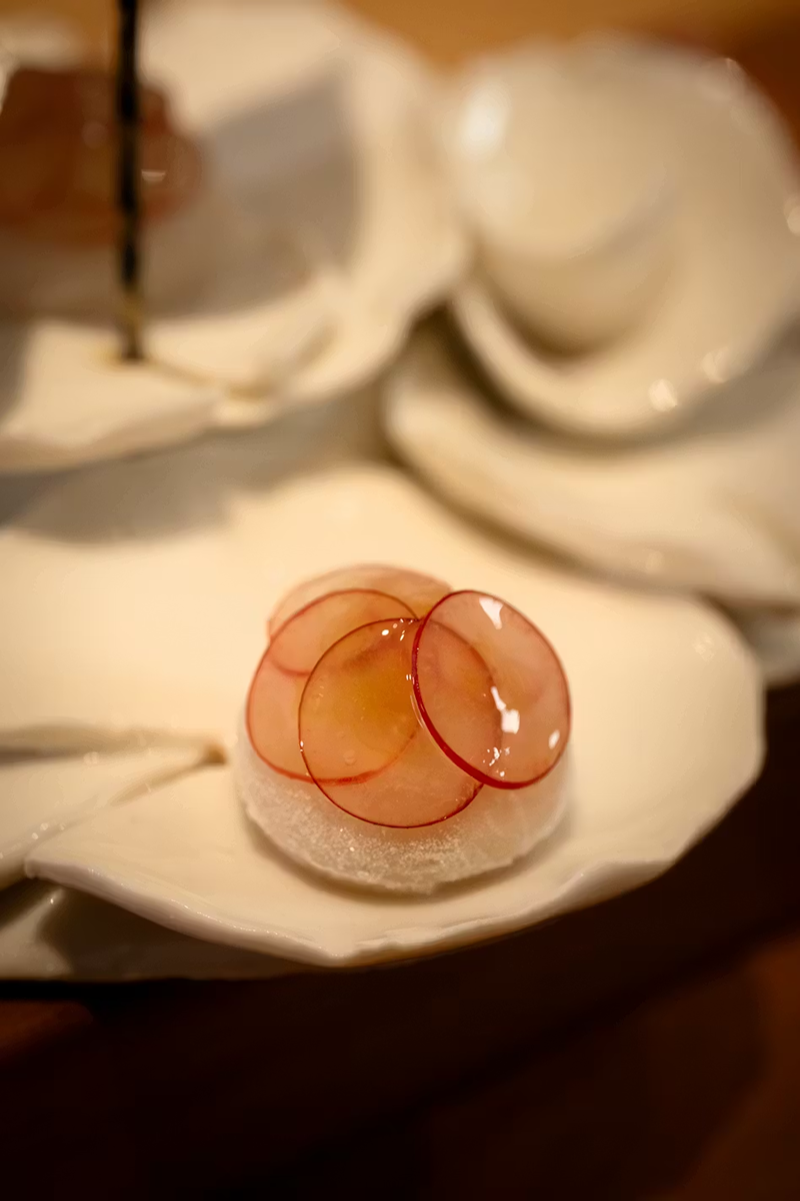
For dessert, Maxime Frédéric takes full creative license, bringing French pastry technique into dialogue with Japanese tradition: white and black rice desserts, glazed mochis with roasted or fruity notes, all prepared à la minute. The tableware itself tells a story — plates handcrafted by artisans from Kyoto and Fukuoka, sake vessels all different from one another, Japanese glassware of ethereal delicacy.
An exceptional beverage program curated by wine director Emmanuel Cadieu — himself a devoted student of Japanese culture — offers sake pairings, rare Japanese whiskies, and a carefully considered wine list to accompany the meal.
Dietary note: vegetarian and gluten-free guests can be accommodated, though the kitchen should be informed in advance. The restaurant is, at its core, a celebration of seafood, soy, and fish in their finest expression.
Service hours: Tuesday to Saturday, dinner from 6:30 pm. Lunch service is also available.
Address: 8 Quai du Louvre, 1st arrondissement, Paris. Within the Cheval Blanc Paris hotel.
THE SPACE: A JAPANESE FOREST IN THE HEART OF PARIS
To enter Hakuba is to leave Paris behind entirely. The space — originally the hotel’s “Limbar” teahouse — was reimagined by celebrated architect Peter Marino with a restraint and depth that feel genuinely Japanese rather than merely decorative.
Dark-grained black walnut walls evoke a forest at dusk. Warm woods of rare essences frame a counter that seats diners in direct view of the chefs. At the entrance, a Tsukubai stone fountain and bamboo channel — brought from Japan specifically for the restaurant — fill the air with the soft sound of flowing water, setting a tone of calm before the first course arrives.
Lighting is intimate and focused: artful spotlights fall on plates and hands, creating a theatrical atmosphere without theatrics. The service uniform — linen outfits tied at the waist, in the manner of traditional Japanese artisans — completes the sense of ceremony. Even the plates are dressed for the occasion.
This is a space designed not just to be eaten in, but experienced. Guests who have dined there use words like “meditative,” “transportive,” and “sanctuary.”
The Map to Modern Luxury
THE CURATED CALENDAR
Discover the world’s most prestigious gatherings & exhibitionsTHE CHEF: TAKUYA WATANABE AND THE SPIRIT OF HOKKAIDO
Understanding Hakuba requires knowing the man behind the counter. Takuya Watanabe was born and raised on Hokkaido — Japan’s wild, northernmost island, where winters are long, the sea is brutally cold, and the produce is extraordinary. His grandfather, a market gardener near Niseko, shaped his philosophy from childhood: get close to nature, understand seasonality, respect the ingredient.
After training under masters in Japan and opening his own restaurant in Sapporo at 27, Watanabe arrived in Paris over a decade ago and fell in love with the city. In 2012, he co-founded Jin — a landmark Paris sushi counter that earned one Michelin star and changed how Parisians understood Japanese cuisine. A decade later, Hakuba is his masterwork: everything he has learned, distilled into an experience of remarkable purity.
“Nothing is superfluous,” Watanabe has said. “Everything is done in pursuit of the perfect balance of flavors.”
THE MICHELIN GUIDE FRANCE & MONACO 2026: THE BIG PICTURE
The ceremony that crowned Hakuba was itself a landmark event. For the first time in its history, the MICHELIN Guide France & Monaco ceremony was held in Monaco — specifically at the Grimaldi Forum on March 16, 2026, in the presence of Prince Albert II. It was a glittering occasion that brought together over 250 guests, including the greatest names in contemporary French gastronomy.
The 2026 edition is a record-breaker: 668 starred restaurants across France and Monaco, 14 more than the previous year. Inspectors awarded 62 new stars in total, including one new three-star restaurant — Les Morainières, a Savoie institution led by chef Michaël Arnoult, who rose from two stars to the summit of French gastronomy. Seven restaurants earned new two-star status (Hakuba among them), while 54 establishments received their first star.
The big winner in terms of prestige was also the most poignant moment of the night: legendary chef Pierre Gagnaire received the Michelin Mentor Chef Award for a career described as “marked by audacity, exacting standards, and a resolutely personal vision of gastronomy.” At 75, the three-starred visionary remains one of the most influential figures in global cuisine.
Not all the news was celebratory. The guide also announced a notable demotion: the iconic L’Ambroisie in Paris, one of the great temples of French haute cuisine, lost its third star — a reminder that Michelin’s anonymous inspectors answer to no one and show no sentimentality.
France now shares with Japan the distinction of being the world’s most Michelin-starred nation, each boasting roughly 550 to 668 starred establishments. Gwendal Poullennec, International Director of the Michelin Guides, celebrated what he called the “vitality” of the French gastronomic scene and praised a new generation of chefs “opening very personal houses throughout France and Monaco.” Sustainability was a growing theme: 14 new restaurants were recognized for their commitment to seasonal produce, producer relationships, and environmentally responsible practice, bringing the total count of sustainability-recognized establishments to over 100.
IS THE MICHELIN GUIDE STILL RELEVANT?
A question asked every year — and answered, every year, by the intensity with which the world pays attention to the ceremony.
The MICHELIN Guide has been rating restaurants since 1900, originally created by tire company founders André and Édouard Michelin to encourage French motorists to drive more and, consequently, wear out more tires. The gastronomy was, at first, a commercial pretext. Over a century later, a Michelin star remains the most coveted, debated, and transformative recognition in the restaurant world.
The guide now covers more than 50 destinations globally, from Tokyo — the city with more Michelin-starred restaurants than anywhere on earth — to Bangkok, São Paulo, and Doha. The 2026 ceremony in Monaco drew journalists from across the globe. Reservations at newly starred restaurants fill within hours of the announcement. Careers are made. Lives change.
Critics point to the guide’s conservatism, its opaque methodology, and the occasionally crushing pressure it places on chefs — some of whom have publicly returned or declined their stars. The mental health toll of maintaining three-star status has been openly discussed by some of the world’s most celebrated chefs in recent years.
And yet: the Michelin Guide remains the standard against which all other restaurant recognition is measured. In an age of influencer rankings, TikTok restaurant culture, and algorithm-driven food guides, there is still something about the anonymous inspector — eating alone, paying full price, returning multiple times — that carries genuine authority. For a restaurant like Hakuba, where craft is performed with quiet, invisible perfection, that methodology feels exactly right.
Hakuba’s second Michelin star is not a surprise to anyone who has sat at its counter.
It is the recognition of something that has been evident from the first service: this is a restaurant operating at a level that transcends nationality, technique, and trend.
Japanese spirit. French excellence. Parisian setting. And at the center of it all, a man from Hokkaido who learned to respect the sea, the season, and the product — and who has been refining that lesson every day for decades.
The white horse has found its stride.
PRACTICAL DETAILS
Restaurant Hakuba
Cheval Blanc Paris
8 Quai du Louvre, Paris 75001
Dinner: Tuesday–Saturday from 6:30 pm
Lunch menu “Shunkan”: €180
Dinner menu “Yume”: €380 (€420 with caviar temaki)
Reservations: contact the restaurant directly via Cheval Blanc Paris
Rating: ★★ Two MICHELIN Stars (MICHELIN Guide France & Monaco 2026)