If the luxury world had a mood this fortnight, it would be restless elegance. Boardrooms are reshuffling, creative directors are bowing out, iconic brands are chasing new identities, and the markets are sending mixed signals. From a royal Burberry capsule to Porsche’s worst year in over a decade, from Kering’s painful surgery to Dubai’s bulletproof penthouses — buckle up. This one had everything. This is your complete fortnightly roundup of what’s moving, shaking, and redesigning the high-end world.
Burberry Goes Royal (Again, But Make It Centenary)
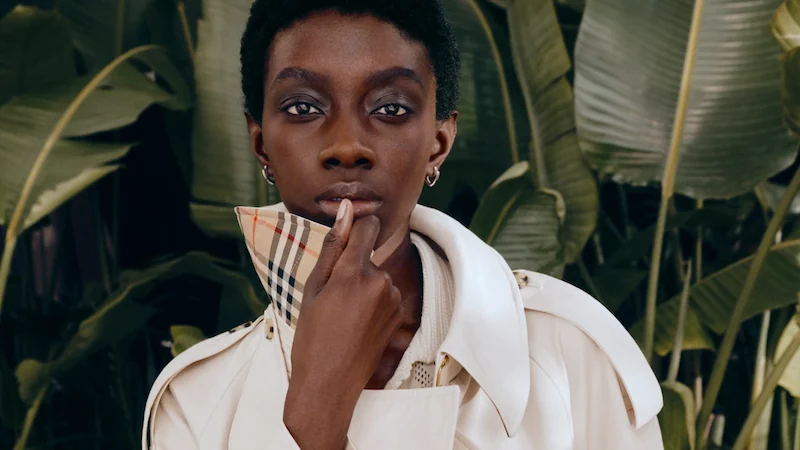
Just when you thought the Burberry check couldn’t carry more cultural weight, the brand went full monarchy. Burberry created a capsule in collaboration with Royal Collection Trust to mark the centenary of Queen Elizabeth II’s birth on April 21, 1926. The four-piece collection is quiet luxury at its most literal: a belted car coat crafted in Castleford, Yorkshire from lightweight cotton gabardine in holly green, woven with contrasting yarns for an iridescent effect, plus a Scottish-woven cashmere scarf and accessories.
And yes — there’s a $585 gold-plated corgi brooch featuring the brand’s Knight motif on a freshwater pearl. The timing is impeccable. The collaboration launches ahead of the largest-ever exhibition of Queen Elizabeth II’s fashion, opening at The King’s Gallery in Buckingham Palace in April.
The brand has been on a remarkable streak in 2026 — and this royal moment might just be the heritage reset it needed after years of identity turbulence. A corgi in a Burberry trench. Fashion doesn’t get more British than this.
Porsche‘s Very Bad, Very Expensive Year
The news from Stuttgart was not pretty. During the 2025 fiscal year, Porsche generated sales of €36.27 billion, representing a 9.5% year-over-year decline. But the revenue drop wasn’t even the headline — the profit story was far more dramatic. The luxury automaker saw its operating profit collapse 92.7% to €413 million from €5.64 billion the year before, largely due to a costly write-down on reversing its electric vehicle strategy. It’s the steepest annual sales decline the company has seen in 16 years, dating back to 2009 during the global financial crisis. China was a particular wound: deliveries there totaled 42,000 units last year, slumping 26% year-on-year. The company plans to shrink its China dealer network by about 30% by the end of 2026 in an effort to protect pricing power. Sound familiar? It should — it’s the Burberry playbook. Less is more, scarcity is the product, and the 911 is apparently still keeping the whole operation afloat.
TAG Heuer Makes History — and Gets a New Boss
LVMH‘s beloved Swiss watchmaker had one of the bigger people-news moments of the fortnight. Béatrice Goasglas has been appointed CEO of TAG Heuer, effective May 1, 2026 — making her the first woman to lead the 166-year-old Swiss watchmaker. She’s very much an insider: after joining TAG Heuer in 2018 as VP Digital & Client Experience, Goasglas was appointed Managing Director of TAG Heuer Asia Pacific and then President of TAG Heuer Americas. She will leverage the brand’s iconic collections and its strategic partnership with Formula 1, which began in 2025 when the brand replaced Rolex as the official timekeeper of the championship.
Fashion’s Creative Director Exodus Continues
The industry’s great reshuffling of creative talent showed no signs of slowing. Two headline exits dropped in the same week, sending the industry into a collective “wait, who’s running what now?” moment. At Etro: Italian firm Etro and designer Marco De Vincenzo ended their collaboration after almost four years, in a decision taken “by mutual agreement” that the company frames as part of “a new strategic phase.” The timing is significant — in December 2025, a group of investors led by Rams Global acquired the remaining stake of the Etro family. New ownership, new creative vision. No successor has been named yet.
At Nina Ricci: Harris Reed, the British-American designer who joined Nina Ricci three years ago, announced he was stepping down from the brand to focus on his namesake label. Reed brought a maximalist, boundary-pushing energy to the historic Parisian house. He presented his final collection for the brand on March 6 in Paris for Fall/Winter 2026. No replacement announced there either. Two historic houses, two vacancies, one very busy week for luxury headhunters.
LVMH: The Empire Builds — Inside and Out
The world’s largest luxury group is moving on multiple fronts simultaneously, and none of them are small. The prize machine keeps spinning. The 13th edition of the LVMH Prize for Young Fashion Designers drew over 2,400 applicants from around the world, and this year’s semifinal felt particularly global — the shortlist includes talents from 17 countries.
The overall winner takes home a €400,000 grand prize plus a tailored mentorship from LVMH teams across sustainability, manufacturing, marketing, and brand management. It’s the group’s most effective long game in talent acquisition — and it’s working.
LVMH completed its acquisition of French publishing house Les Editions Croque Futur, raising its stake from 40% to 100%, adding business magazine Challenges, science outlet Sciences & Avenir, and La Recherche to a media portfolio that already includes Les Echos, Le Parisien, and Paris Match.
Kering: The Phoenix Attempt (In Progress)
Kering is not in crisis — it’s in surgery. And the prognosis is cautiously optimistic. The full-year 2025 numbers were ugly but meaningful: total revenue of €14.68 billion, down 10% on a comparable basis, with recurring operating income falling 33% and the group swinging to a net loss of €30 million.
But the more important number is the trajectory. Q4 came in at -3% organic, beating analyst forecasts of -5%, and CEO Luca de Meo used the results call to deliver one of the clearest statements of intent heard from a luxury group in years: “This revenue level reflects the low point of the cycle and the starting point of our rebound. We will see growth in 2026 and increasing margin for all the brands.”
The Gucci story remains the one everyone is watching. Gucci accounts for 59% of the group’s recurring operating profit — so when Gucci sneezes, Kering catches pneumonia. Meanwhile, de Meo is executing a dramatic operational reset, closing stores and resizing the retail network with an urgency rarely seen at Kering. HSBC analyst Erwan Rambourg described the new management as conveying “a very visible sense of urgency, ambition and hunger.” The bet is simple: trust de Meo, and wait. The fashion world is doing exactly that — nervously.
Richemont: Jewelry Is Having Its Moment
While the rest of the luxury sector has been grimacing, Richemont has been on a roll — shares up 20% year-to-date and up 120% over five years, compared to +38% for LVMH and -48% for Kering. The engine is simple: Richemont has weathered the luxury downturn better than rivals because of the appeal of its pricey rings and bracelets, which are often viewed as a better store of value than expensive apparel and leather goods.
The Map to Modern Luxury
THE CURATED CALENDAR
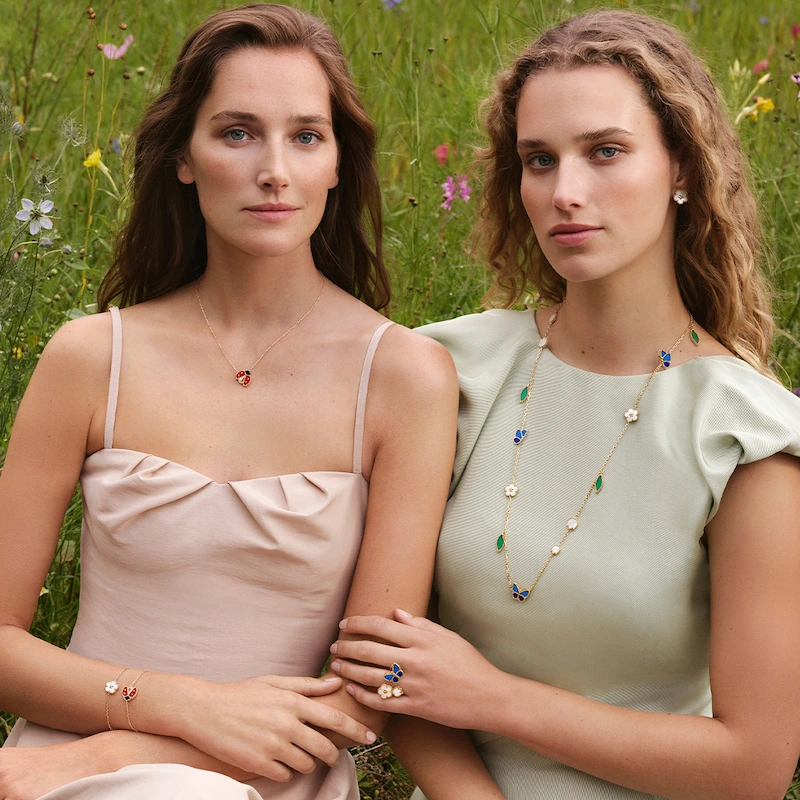
Discover the world’s most prestigious gatherings & exhibitionsIn Q3 fiscal 2025, the group achieved sales of €6.4 billion, up 11% at constant exchange rates, with jewelry — powered by Cartier (the world’s most valuable jewelry brand, home of the Love bracelet and Panthère de Cartier collections) and Van Cleef & Arpels (the Parisian maison behind the iconic Alhambra and Perlée lines) — rising 14%. Cartier alone is estimated to account for roughly 60% of the group’s total revenue, making it one of the most profitable single brands in all of luxury.
Jewelry was the standout category in luxury in 2025, growing an estimated 4% to 6% globally at constant currency, with shoppers showing a clear preference for hard goods that offer more tangible, lasting value.
Luxury Hotels: The Renaissance is Booked Solid
2026 is shaping up as one of the most remarkable years for luxury hotel openings in recent memory. The theme is unmistakable — depth over dazzle, roots over repetition. Four Seasons is undertaking a full Gothic grandeur restoration of Hotel Danieli, the iconic Venetian property that has stood along the lagoon since the 14th century — you still arrive by boat, but everything has been made fresh.
The Park Gstaad, the Swiss ski town’s first luxury hotel when it opened in 1910, is reopening as a Four Seasons after extensive renovations, with a destination spa, indoor and outdoor pools, ski services, and a winter ice rink. Aman’s long-awaited debut in Baja California is finally here: Amanvari blends into the desert landscape with white concrete, natural stone, and tropical wood, with just 18 villas, each with a private pool.
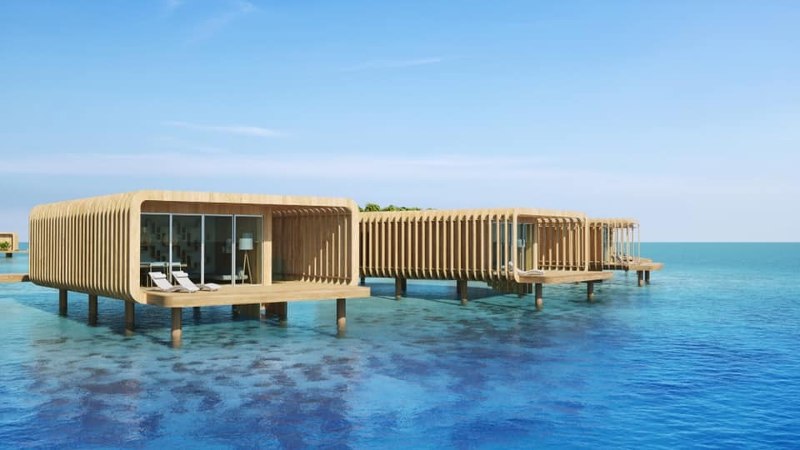
Rosewood is having a very full year. Rosewood AMAALA opens in Saudi Arabia’s Red Sea region as an ultra-luxury regenerative escape, focused on zero-carbon operations, zero landfill waste, and renewable energy, while Rosewood Blue Palace marks the brand’s first Greek property on the coast of Crete. Rosewood Milan has also opened steps from Via Montenapoleone in a 19th-century palazzo, with 70 rooms and a quiet courtyard garden in the heart of Italy’s fashion capital.
Meanwhile, Baccarat is taking over Rome’s historic 1889 Hotel Majestic — the first hotel ever built on Via Veneto — restoring heritage details while adding the crystal house’s signature lavish finishes. La Dolce Vita, but make it crystal.
Dubai: Bulletproof Real Estate (Almost)
Dubai’s property market is one of the most extraordinary stories in global luxury right now — and geopolitics just threw it its first real stress test in years. The numbers before the tension were staggering. In 2025, Dubai real estate transactions reached AED 917 billion — a 20% annual increase in value and volume, with a record 270,000 deals. Emaar Properties alone reported record sales of AED 80.4 billion. The ultra-luxury end continues to defy gravity.
The week of March 6–12 saw an Aman Residences apartment in Jumeirah 2 sell for AED 422 million ($114.9 million) — the third most expensive apartment ever sold in Dubai — even after regional tensions had escalated. But there are nuances. Brokers are reporting a 30% drop in site visits and enquiries since late February, with 60–80% of “on-hold” deals expected to close in Q2 if regional tensions stabilise. Mid-market buyers are now negotiating 3–7% discounts, while ultra-high-net-worth demand remains intact.
Christie’s: Art, Cars, and a Paris Handbag Moment
Christie’s has opened 2026 promising more categories than ever and expectations for record-breaking sales — and the auction calendar is already delivering. The highlights read like a fantasy shopping list. Christie’s returned to Paris for its first live Handbags auction in three years, featuring 16 exceptional pieces including the iconic Hermès Haut à Courroies 50 in Black Fjord Leather, once owned by Jane Birkin and Serge Gainsbourg. In Geneva, the luxury auction season kicked off with sales exceeding CHF 81 million at a bespoke event.
Experiential Luxury: The New Arms Race
On the broader experience front, money is still moving — it’s just moving in very specific directions. Vista Global’s XO expanded its private aviation membership to include access to headline sporting events — think the FIFA World Cup and the Monaco Grand Prix in 2026. Oceania Cruises launched a full rebrand under the campaign “The Joy of Traveling Well,” pivoting explicitly toward adult-only, experience-led voyages. And Waldorf Astoria Los Cabos Pedregal completed a major renovation — one of the more dramatic cliff-side resort upgrades in recent memory.
The Macro Read: What All of This Means
Pull every story together and a coherent picture emerges. The luxury world in March 2026 is splitting into two distinct camps. In one corner: the hard luxury players — jewelry, prime real estate, collectibles — proving remarkably resilient to both economic softness and geopolitical shock.
In the other corner: fashion and leather goods is in a deep and consequential reset. The common thread is the same one that runs through the Burberry story we started with: the brands that controlled who belongs at the party are doing fine. The brands that lost that control are paying for it.
And the brands learning that lesson fastest? They’re the ones pulling back, getting scarce, and letting desire do the heavy lifting. Scarcity. Story. Selectivity. The holy trinity of luxury — and the only exit from the current fog.