In a nutshell: Beyond Istituto Marangoni, LST, IIFM Milano, and Accademia Costume & Moda, the luxury education landscape is rich with options—from Glion’s hospitality-luxury blend to emlyon’s global MSc, and from budget-friendly short courses to elite executive masters. But with price no object for the luxury set, the real question is: are these programs adaptive, trend-savvy, and truly applicable—or just riding on reputation?

More Programs to Consider
The luxury education market is vast, and these programs deserve a spot in your research. Glion Institute of Higher Education (Switzerland/London) offers a Master’s in Luxury Experience and Brand Management (90 ECTS, 1.5 years, ~CHF 52,100) with a six-month internship option and a 98% graduate employment rate. Their Bachelor in Luxury Business includes three professional internships for hands-on experience.
emlyon Business School’s MSc in Luxury Management & Marketing (18 months, €35,700) is a global powerhouse with a 96% employment rate within six months and alumni at Louis Vuitton, Dior, and Bulgari.
IFM Paris’s MSc in International Fashion & Luxury Management (1-2 years, €39,400 total) boasts an 86% employment rate at six months and is ranked #2 in France’s 2026 luxury education league.
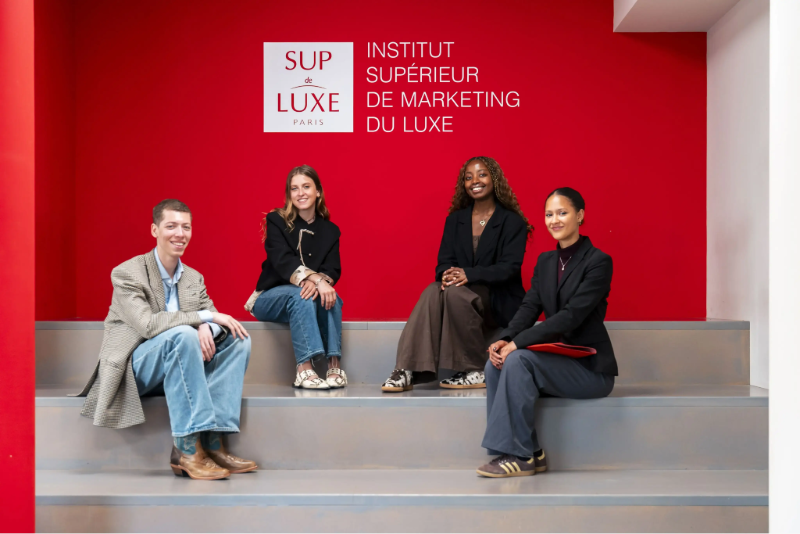
ESSEC Business School’s Master in Luxury Management (2 years, €45,830) tops the French rankings, while Sup de Luxe’s MBA (€36,100) has a 59.2% net employment rate. For budget-conscious learners, LSB UK’s Luxury Brand Management Short Course offers flexible formats (self-paced £850, online £1,725, or London campus £2,300) with practical, career-focused content.
INSEEC’s Master Cycle in Luxury Brand Management (work-study option) reports a 92.4% employment rate six months post-graduation, with starting salaries of €2,500-€3,300/month.
Ravensbourne University London’s Extended Masters in Luxury Brand Management boasts a 95.3% employment rate and strong industry connections. These programs span the spectrum—from boutique-style intensives to full-blown MBAs—ensuring there’s a fit for every ambition and budget.
For Whom Are These Programs?
The audience is as diverse as the programs themselves. Glion’s offerings suit those leaning toward hospitality-luxury (hotels, resorts, fine dining), while emlyon’s MSc is for globally-minded professionals seeking multi-city exposure (Paris, London, New York, Rome, Milan). IFM Paris and ESSEC cater to those aiming for top-tier French luxury houses (LVMH, Kering, Hermès), with IFM’s program particularly strong for fashion-specific roles. Sup de Luxe and INSEEC are ideal for French-market aspirants, with INSEEC’s work-study option appealing to those wanting to earn while they learn. LSB UK’s short course is perfect for career-switchers or those testing the waters without a full degree commitment. Ravensbourne’s program suits creative types wanting to blend design thinking with business strategy. Whether you’re a fresh graduate, a mid-career professional, or an executive, there’s a program tailored to your stage and goals.
How Much Are They Costing?
Costs vary wildly, but for the luxury audience, price is a non-issue—it’s about value and prestige.
Glion’s Master is ~CHF 52,100 (total academic costs can hit CHF 59,200), while their Bachelor is a hefty CHF 190,100 total. emlyon’s MSc is €35,700 for 18 months.
IFM Paris’s MSc is €39,400 over 1-2 years (€16,900 year one, €22,500 year two for EU students). ESSEC’s Master is €45,830 over two years. Sup de Luxe’s MBA is €36,100 over two years. INSEEC’s work-study program is employer-funded, with tuition varying by year (€12,950-€13,390 annually).
The Map to Modern Luxury
THE CURATED CALENDAR
Discover the world’s most prestigious gatherings & exhibitionsLSB UK’s short course is the budget-friendly outlier: £850 self-paced, £1,725 online, or £2,300 London campus.
Ravensbourne’s Extended Masters costs weren’t listed, but expect UK postgraduate rates (likely £10,000-£20,000).
For context, Istituto Marangoni‘s master (€31,000-€33,500) and IIFM Milano’s (€21,000) sit mid-range, while LST’s £3,500 short course is the most accessible entry point. For the luxury set, it’s not about the sticker price—it’s about the ROI in networks, placements, and career acceleration.
Former Luxury Brands Employees Teaching?
Yes, across the board. Glion’s faculty and guest speakers come from luxury hospitality and brand backgrounds, with 4,000+ industry partnerships fueling real-world exposure. emlyon’s program includes company projects and internships with luxury houses, putting you in direct contact with industry insiders. IFM Paris and ESSEC have deep ties to French luxury giants, with faculty often drawn from LVMH, Kering, and Hermès circles. Sup de Luxe’s MBA is “professionnalisante” with close links to Parisian luxury groups. INSEEC’s work-study model means you’re learning on the job at actual luxury companies. LSB UK’s faculty includes industry practitioners, as evidenced by student testimonials praising practical, real-world insights. Ravensbourne’s strong industry connections suggest similar access to luxury professionals. The pattern is clear: these programs don’t just teach theory—they bring the luxury world into the classroom.
Do They Really Help with Employment?
The data says yes, emphatically. Glion reports a 98% graduate employment rate, with 4,000+ partnerships and 250+ companies recruiting on campus annually. emlyon’s 96% employment rate within six months is backed by alumni placements at Louis Vuitton, Dior, and Bulgari. IFM Paris’s 86% employment rate at six months is among the highest in France. INSEEC’s 92.4% employment rate and €2,500-€3,300/month starting salaries speak for themselves. Ravensbourne’s 95.3% employment rate and #1 UK ranking for creative arts employment outcomes add credibility. LSB UK’s testimonials show real career transitions (e.g., a student landing a premium brand role after the course). Istituto Marangoni’s 91% placement rate and IIFM Milano’s internship-to-job pipeline round out the picture. The consensus: these programs don’t just promise employment—they deliver it, with rates consistently in the 85-98% range.
What Are the Most Well-Reviewed?
Based on 2026 rankings and employment data, ESSEC leads France’s luxury education pack, followed by IFM Paris and emlyon. Glion’s 98% employment rate and global reputation (ranked #3 worldwide for Hospitality & Leisure Management by QS 2026) make it a top choice for hospitality-luxury aspirants. emlyon’s 96% employment rate and multi-city model earn high marks for global exposure. INSEEC’s work-study model and high satisfaction rate (81%) make it a practical favorite. Ravensbourne’s #1 UK ranking for creative arts employment outcomes is a strong endorsement. LSB UK’s short course gets praise for accessibility and practical value, though it lacks the prestige of the bigger names. Istituto Marangoni remains a global leader with its 91% placement rate and alumni network, while IIFM Milano’s internship-heavy approach is well-regarded for hands-on learning. The “best” depends on your goals: for prestige and French luxury, ESSEC/IFM; for global exposure, emlyon; for hospitality-luxury, Glion; for budget-friendly entry, LSB UK or LST.
The Soft Critical Angle: Reputation vs. Real-World Relevance
For the luxury audience, where price is no barrier, the real litmus test isn’t cost—it’s whether these programs are truly adaptive and in tune with the latest trends, or just coasting on legacy reputation. The luxury sector is evolving at breakneck speed: AI personalization, digital transformation, sustainability, and shifting consumer expectations are reshaping the game. Yet, a 2026 study on hospitality education reveals a stark gap: graduates often lack practical readiness, with HR managers noting that curricula fall short on operational skills, sustainability, and digital alignment. This “reality shock” leads to high turnover and extended onboarding—hardly the seamless entry luxury brands crave. The question lingers: are these programs teaching skills that are applicable in today’s luxury landscape, or are they resting on the laurels of their brand names?glion+3
Adaptive or Just Reputation?
Some programs are stepping up. SKEMA’s MSc Global Luxury and Management, for instance, has pathways developed with LVMH, focusing on AI, clienteling, and customer experience—directly addressing 2026’s digital and client-centric demands.
Regent’s University London’s MA Luxury Brand Management explicitly tackles emerging technologies, social/environmental issues, and changing market preferences, encouraging critical reflection on leadership and corporate responsibility.
Paris School of Business’s Master includes modules on heritage, sustainability, and digital transformation, signaling a shift toward modern relevance.
Audencia’s MSc in Sustainable Luxury Management integrates digital transformation and sustainability as core pillars, not afterthoughts.
But not all are keeping pace. A 2026 analysis of luxury brand management courses warns that programs treating sustainability as peripheral or failing to address AI, resale platforms, and regulatory shifts are producing graduates who are “commercially literate but legally exposed.” The Luxury & Hospitality Career Index 2026 adds another layer: while alumni rate their education highly for cross-cultural communication and industry understanding, only 9% were hired through school channels—suggesting that personal networks, not formal pipelines, often drive employment. This hints that while the education is valued, the application of that education in the real world may still rely more on who you know than what you learned.
Applicable or Just Prestige?
The verdict is mixed. Programs like SKEMA, Regent’s, and Paris School of Business are clearly adapting—embedding AI, sustainability, and digital transformation into their DNA, with live projects, company collaborations, and real-world briefs. These are the ones teaching skills that are applicable, not just theoretical. But others may still lean heavily on reputation, with curricula that, while prestigious, don’t fully address the operational and digital realities of 2026’s luxury sector. For the luxury audience, the takeaway is clear: don’t just chase the biggest name—dig into the curriculum. Ask: Does this program teach AI-driven personalization? Does it tackle greenwashing and supply chain transparency? Does it offer hands-on projects with actual luxury houses? If the answer is yes, you’re investing in applicable skills. If it’s just a fancy name and a network, you might be paying for prestige without the practical punch. In a world where luxury is as much about innovation as it is about heritage, the best programs are those that blend both—teaching you to honor the past while mastering the future.
Luxury brand management programs are a diverse ecosystem, with options for every budget, ambition, and career stage. But for the discerning luxury audience, the real value lies not in the price tag or the prestige, but in the applicability of what’s taught. Are these programs adaptive, trend-savvy, and truly equipping you for 2026’s luxury landscape—or are they just riding on reputation? The answer, as the data shows, is a mix: some are leading the charge with cutting-edge curricula, while others may need a refresh. The key is to look beyond the brochure and into the syllabus—because in luxury, as in life, the devil is in the details.