L’Oréal and NVIDIA are using AI to build formulas that actually work — faster, smarter, and with zero guesswork.
Imagine a laboratory where no beaker is ever tipped, no compound ever burns, and no researcher endures a single failed test batch — because the entire experiment has already been run, a thousand times over, in the silent corridors of a supercomputer. Welcome to the new frontier of luxury beauty, where the most exciting innovation isn’t in a jar on your vanity. It’s happening at the atomic scale, inside a machine.
L’Oréal, the world’s most powerful beauty group, has just expanded its partnership with NVIDIA — the chip architect behind the artificial intelligence revolution — in a collaboration that will fundamentally change how skincare and beauty products are conceived, tested, and brought to market. The announcement, made at NVIDIA’s GTC AI Conference in San Jose this March, signals something the industry has long anticipated: beauty’s full, unapologetic pivot into computational science.
100× faster discovery. Thousands of variables tested simultaneously. Zero physical lab tests at concept stage.
Inside the Digital Laboratory
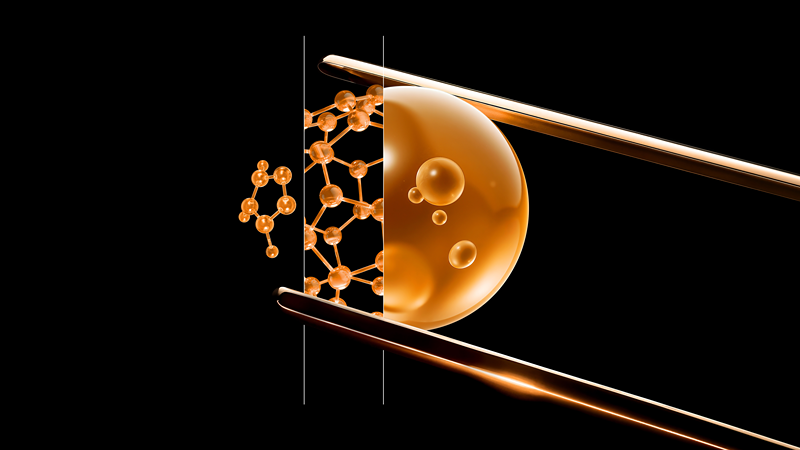
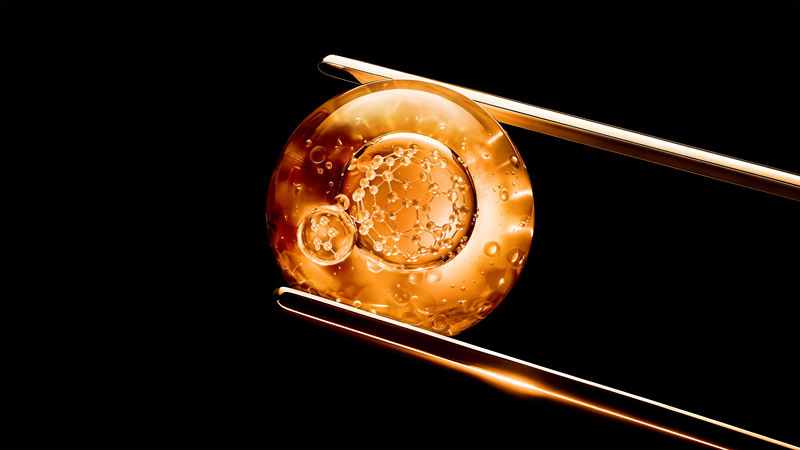
The centrepiece of the partnership is NVIDIA ALCHEMI, a machine learning framework designed to simulate how molecules behave — not at the macro level of a serum blending into skin, but at the atomic scale, where a single ingredient’s structure determines whether it will protect, penetrate, or do precisely nothing. L’Oréal’s researchers are now using this framework directly within their R&I ecosystem, creating what the group is calling a “beauty and skincare AI engine.”
The implications are extraordinary. Traditionally, developing a new formulation is a process measured in years: hypothesis, synthesis, test, failure, refinement, repeat. With NVIDIA ALCHEMI, L’Oréal’s scientists can simulate ingredient performance and texture in a virtual environment, testing thousands of molecular variables simultaneously before a single compound touches a physical substrate. The result is a discovery process that is, by the company’s own reckoning, 100 times faster than traditional methods.
“By applying AI-powered molecular simulation to our most proprietary actives, we are bridging atomic-scale discovery with real-world consumer benefit.” — Barbara Lavernos, Deputy CEO, Research, Innovation & Technology, L’Oréal.
For the luxury consumer, this isn’t merely a backend efficiency story. It is a direct promise: that the active ingredients in tomorrow’s most advanced serums, sunscreens, and treatments will be optimised with a precision that the human eye — however skilled — could never achieve alone. The era of “we think this works” is giving way to “we know exactly why, and we know exactly how much.”
What is NVIDIA ALCHEMI?
NVIDIA ALCHEMI is a machine learning framework built for computational chemistry and materials science. It models how atoms and molecules interact under various conditions — predicting properties like stability, absorption, reactivity, and texture without physical synthesis. In beauty applications, this means testing a UV-filter molecule’s photoprotective efficacy or a skin-brightening compound’s cellular interaction in a digital environment, at unprecedented speed and scale.
Two Pillars of Skin Mastery
L’Oréal has identified two initial areas of focus for the AI engine — both of which speak directly to the concerns of a discerning, skin-conscious clientele.
01 — Photoprotection. The science of shielding skin from UV damage is far more complex than an SPF number suggests. ALCHEMI allows L’Oréal to model precisely how UV-filter molecules absorb, scatter, and disperse solar radiation at the molecular level — optimising protection while refining texture, elegance on skin, and compatibility with other actives.
The Map to Modern Luxury
THE CURATED CALENDAR
Discover the world’s most prestigious gatherings & exhibitions02 — Skin Tone Management. Hyperpigmentation, uneven tone, and premature ageing are among the most requested concerns in luxury skincare. By simulating how brightening and melanin-regulating actives behave at a cellular level, L’Oréal can identify optimal molecular candidates before they ever enter the lab, dramatically raising the ceiling for efficacy.
The focus on preventing premature ageing is particularly notable. In a category where “anti-ageing” claims are as plentiful as the moisturisers making them, the ability to prove molecular mechanism — to demonstrate not just that an ingredient works, but precisely how and why — is the new gold standard. And this partnership is designed to deliver exactly that.
From Marketing to Molecules
It is worth noting how far this collaboration has evolved. The initial partnership between L’Oréal and NVIDIA was rooted in marketing and advertising — applying AI to streamline creative pipelines and campaign targeting. That is no small thing in an industry that spends billions annually on imagery and storytelling. But this expansion into R&D represents a categorically different ambition.
Where the first chapter was about reaching consumers more cleverly, the second is about building genuinely better products. It is the difference between a beautiful advertisement and a beautiful result — and luxury consumers, who have grown increasingly sophisticated in their reading of ingredient lists and clinical claims, will understand the distinction immediately.
“L’Oréal can simulate ingredient performance at an atomic scale, accelerating breakthrough discoveries in formulation and delivering advanced beauty and preventive products to consumers.”
— Azita Martin, VP & General Manager, AI for Retail & CPG, NVIDIA
The Luxury Dividend
For the client who invests in prestige beauty, the practical implications of this partnership will unfold gradually — but they will be profound. Think formulations where the active you’re paying for is not merely present but calibrated to perform at its precise molecular optimum. Sunscreens that are both clinically superior and genuinely elegant to wear. Serums where each ingredient has been stress-tested against thousands of molecular variants before a single litre is manufactured.
There is also something to be said for what this represents culturally. The luxury world has always promised “the best” — but for too long, beauty’s version of “best” was built on mystique rather than mechanism. What L’Oréal and NVIDIA are building together is a new kind of luxury: one grounded not in heritage alone, but in verifiable, atom-level precision. It is, in the truest sense, science as service.
The NVIDIA GTC AI Conference stage may seem an unlikely place for a beauty announcement. But then again, the future of your skincare ritual was always going to look like this — not a laboratory in white coats and fluorescent light, but a supercomputer running millions of molecular simulations while you sleep. The serum waiting for you at the end of that calculation? Worth the wait.
Key Details:
Framework: NVIDIA ALCHEMI — ML-powered computational chemistry engine for atomic-scale molecular simulation.
Discovery Speed: 100× faster than traditional formulation development methods.
Focus Areas: Photoprotection (UV science) & Skin tone management (pigmentation, premature ageing).
Announced: NVIDIA GTC AI Conference, San Jose — March 16–19, 2026.
Scope: Expansion of existing AI partnership from marketing into core R&D and scientific discovery.