The Market They Can’t Ignore. An edited intelligence report for the discerning collector
What was once the quiet domain of obsessives and connoisseurs has become one of the most commercially dynamic corners of the luxury world. The niche perfume segment is expected to reach $4.85 billion in 2026, growing at a 9.1% compound annual rate — a pace that vastly outstrips the mass-market’s 2.69%. Luxury fashion houses from Bottega Veneta to Balmain are now launching ultra-premium lines to try to capture this energy, competing with more agile independent houses — and mostly losing. The mid-market price range of $50 to $150 has seen a measurable decline as the market bifurcates, with consumers choosing either the genuinely artisanal or nothing at all. The houses featured here occupy the upper end of that divide, and right now, their moment is undeniable.
The Fairs That Define the World
For anyone unfamiliar with the trade calendar of artistic perfumery, a brief orientation is necessary — because these events are where the industry truly reveals itself, far from department store counters and influencer campaigns.
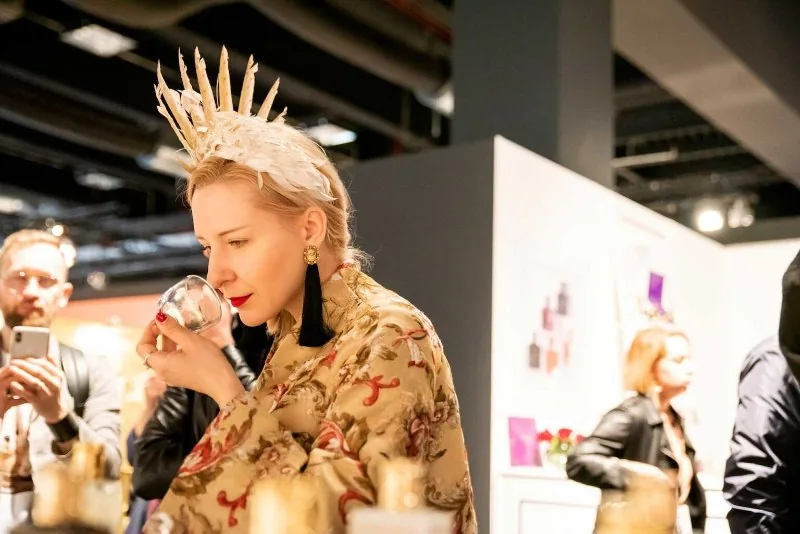
Esxence (Milan) is the undisputed epicenter of the niche and artistic fragrance world. Held at the MiCo Milano Convention Centre, it is the world’s leading trade event dedicated entirely to artistic perfumery — where the most independent, uncompromising fragrance creators meet the buyers, press, and collectors who speak their language. Since its founding in 2009, it has grown into a gathering of nearly 400 brands from 38 countries, welcoming over 13,000 attendees. It is not a consumer fair in the conventional sense; it is a professional and curatorial event where new launches are unveiled, distribution partnerships are forged, and the creative direction of the entire segment is set. The 2026 edition marks its 16th year and adopts a new summer format, taking place from June 3 to 6. For anyone with a serious interest in fragrance, it is the single most important appointment on the calendar.
Beyond Milan, several other events command attention at the international level. Beautyworld Middle East (Dubai, May) has grown into one of the most commercially significant platforms for luxury and niche fragrance, reflecting the Gulf region’s role as one of the world’s most important markets for oud, amber, and high-concentration extraits. In the United States, Elements Showcase (New York) focuses specifically on indie and artisan fragrance and beauty, offering a more intimate, collector-oriented atmosphere. The World Perfumery Congress, held biennially, brings together master perfumers, raw material suppliers, and creative directors for the most technically rigorous conversations in the industry. For those interested in where ultra-niche meets fine art and craft, Pitti Fragranze in Florence — held each September at the Stazione Leopolda — is perhaps the most aesthetically curated of all, and the closest in spirit to Esxence.
The Houses Moving Forward
- ROJA (London)
ROJA London recently unveiled Espresso Aoud, an unexpected addition to the iconic Aoud Collection — a gourmand composition built around roasted coffee beans blended with caramelised nuts and the depth of oud. Simultaneously, the house launched two Harry Potter-inspired limited editions in collaboration with Warner Bros. — a move that surprised some collectors but underscores the house’s confidence in its own identity: even within commercial partnerships, the materials and execution remain at the highest level. Roja Parfums is widely recognized as working only with the finest raw materials — Rose de Mai, Jasmine de Grasse, natural ambergris — all costing considerably more than pure gold.
- Ormonde Jayne (London)
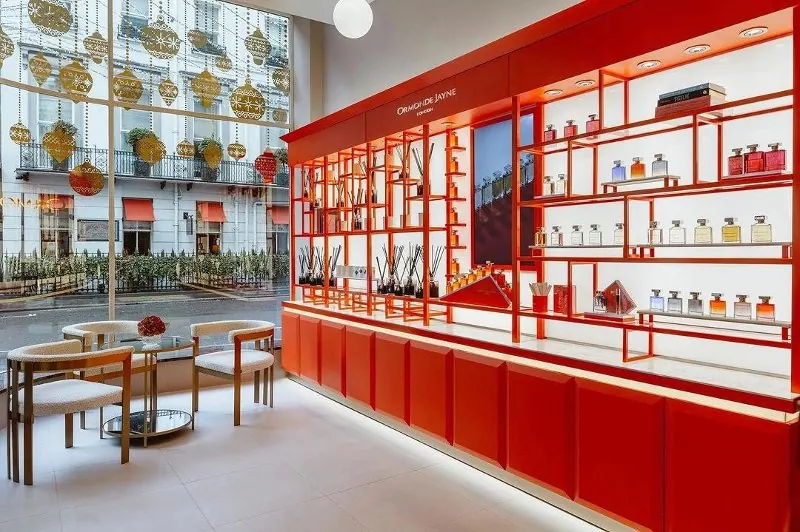
Linda Pilkington’s house entered 2025/2026 in a period of exceptional creative output, with a reimagined Four Corners of the Earth collection and a series of exclusive launches. Sybarite, launched in 2025, is an oriental-vanilla composition built around hazelnut, Timur pepper, jasmine, and vanilla absolute — a rich, gourmand structure reflecting the brand’s Bond Street origins. Gold Leaf, a limited edition created in collaboration with Noseway, centers on rare tea notes — Oolong and Lapsang Souchong — inspired by the culture and trade history of Taiwan.
The house’s philosophy of pouring at a minimum of 25% concentrated oils, infusing for months before filtration, and manufacturing all products in their own London laboratory keeps it firmly in the upper tier of authentic artisanal production.
- Puredistance (Netherlands)
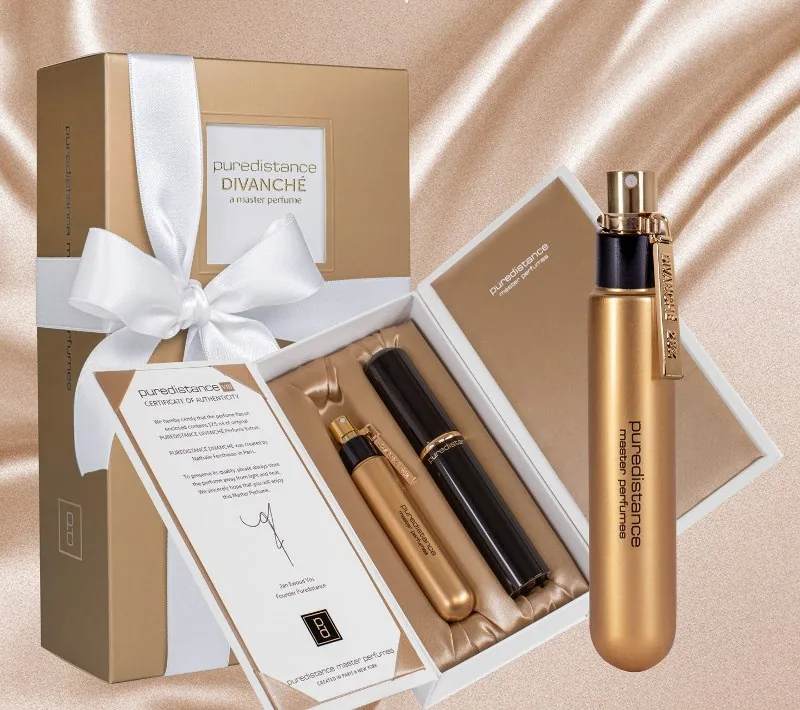
Jan Ewoud Vos continues his singular, unhurried approach to luxury. Divanché, launched in 2025 by perfumer Nathalie Feisthauer, is a floral-fruity extrait built around gardenia, tuberose, champaca, and heliotrope over a warm base of ambroxan and benzoin. A companion release, Svito Lina, composed by Antoine Lie, is an aromatic-spicy extrait opening with Calabrian bergamot, Sicilian lemon, and juniper, settling into sandalwood, tonka bean, and amber.
Until September 2026, the JAN Niche Concept store holds worldwide exclusivity on Svito Lina — a reminder that Puredistance’s distribution remains one of the most deliberately restricted in the world, available in under 100 stores across 40 countries. Founder Jan Ewoud Vos has stated his philosophy plainly: “enough is enough and quality over quantity.”

- Histoires de Parfums (Paris)
Founder Gérald Ghislain is celebrating 25 years of his olfactory library, and he chose to mark the anniversary provocatively. In February 2026, the house launched This Is Not a Blue Bottle 1.8 — Sold Out!, a unisex follow-up to the 2016 original. Ghislain describes it as smelling “like the best version of yourself” — a fragrance that deliberately refuses classification, defined purely by feeling rather than notes. The conceptual provocation is vintage Ghislain: the name is both a Magritte-style art reference and a commentary on the performative scarcity of the luxury market itself.
- Salle Privée (Amsterdam)
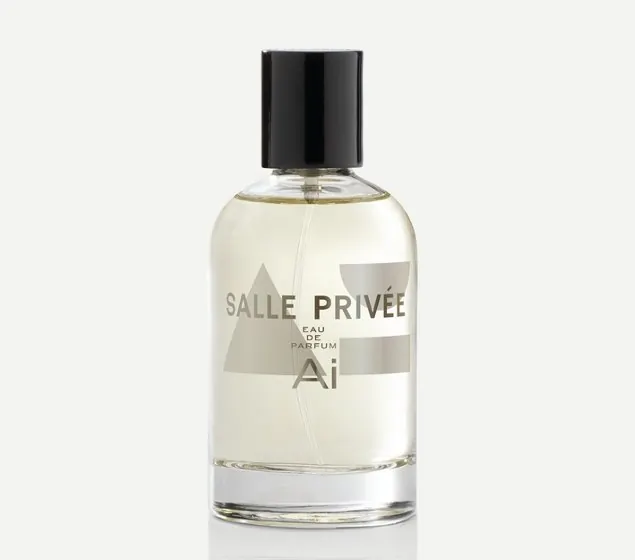
The Amsterdam house founded by Patrick Munsters — formerly of Scotch & Soda — added Ai to its collection in 2025, a fragrance composed by Aurélien Guichard that merges human creativity with artificial intelligence. Built around ambroxan CX, thyme, cypress oil, and solar musk notes, it is described as embodying “modern sophistication, redefining the boundaries of traditional perfumery.” Munsters’ founding philosophy — that fragrance is used to “highlight and establish mood” rather than define a person — and the house’s commitment to avoiding overproduction make Salle Privée one of the most intellectually coherent propositions in ultra-niche today.
The Trends Shaping the Segment
Three forces are clearly directing where the finest houses are headed in 2026:
The Hybrid Architecture of Naturals and Molecules. The most important stylistic feature emerging across the luxury niche segment is a hybrid form: natural materials — frankincense, vetiver, ambrette, rockrose — used as anchors of depth, with high-tech molecules controlling structure, transparency, and temperature dynamics. The result is warmth without heaviness, and complexity without opaqueness. This is precisely what separates the serious houses from the imitators.
The Retreat from Seasons. Master Perfumer Christophe Laudamiel has noted that seasonal fragrance logic is increasingly irrelevant in 2026 — consumers are wearing heavy scents in summer and fresh scents in winter, driven by the influence of social media, global travel, remote work, and climate change. The best niche houses have always operated outside seasonal constraints; this is now simply the mainstream consumer’s reality too.
The AI Question. New fragrance ingredients derived from AI, as well as new natural extracts introduced by niche perfumers foraging locally, are making the fragrance catalogs more exciting — but also raising difficult questions about authenticity. The houses that will endure are those where the master perfumer’s hand remains visible and primary. As one respected voice in the industry warned, “we will see the further mass distribution of luxury brands owned by perfume licensors or investors with not much genuine passion or knowledge for perfume — this system might even implode sooner rather than later.”
Gender Neutrality as Default. Gender-neutral fragrances have grown 66% in popularity, while 72% of the market now favors clean-label perfumes that emphasize ingredient transparency. Nearly every house in the ultra-niche tier now creates without gendered categories — a reflection not of trend-chasing, but of the simple truth that great perfumery was never really gendered to begin with.
The paradox at the heart of 2026’s ultra-niche segment is this: the more the mainstream market crowds in, the more valuable genuine restraint becomes.
The houses on this list — from Puredistance with its fewer-than-100-stockists distribution, to Histoires de Parfums celebrating 25 years without a single mass-market concession, to Ormonde Jayne manufacturing every fragrance in its own London laboratory — are the ones whose rarity is structural, not manufactured. That is the distinction a serious collector needs to hold onto. In a world where “niche” is becoming a marketing category rather than a genuine philosophy, the truly rare is rarer than ever.