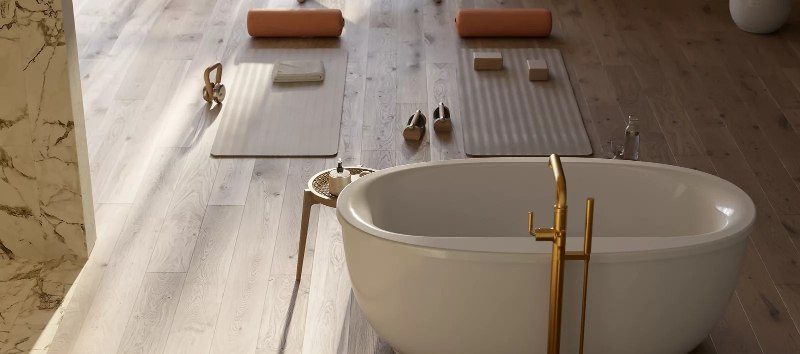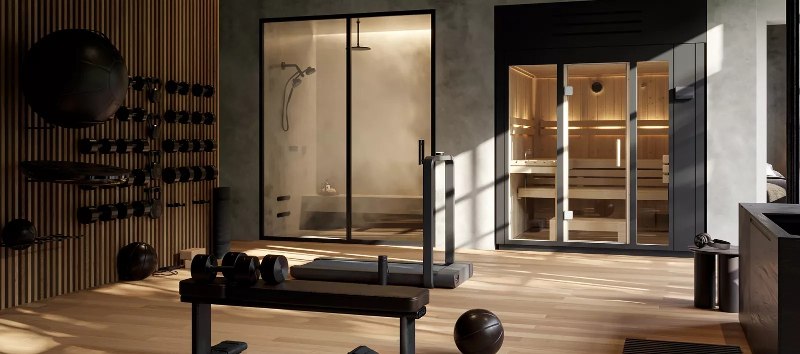
@Kohler
The era of the purely utilitarian home gym is over. An emerging and aspirational design trend—the wellness room—is redefining residential real estate, positioning the home not just as a place to live, but as a dedicated, therapeutic sanctuary for mind and body. This shift reflects a growing commitment among homeowners to integrate the luxurious rituals of high-end spas into their daily lives.
The driving force behind the wellness room is the demand for thermal and water therapies at home. What was once the exclusive domain of luxury health clubs is now becoming a covetous feature in residential design, accelerated by the pandemic’s focus on at-home health. Designers and architects are seeing clients dedicate spare rooms, basements, and even large primary bathroom extensions to restorative hydrotherapy baths, saunas, and cold plunges. As design specialist Patricia Toering notes, clients are moving “beyond saunas” to integrate cold plunge, aromatherapy, and light therapy into their personal spaces.
This is not merely an aesthetic trend; it’s driven by concrete health benefits associated with thermal rituals.
The cycle of heat (vasodilation) and cold (vasoconstriction) stimulates blood flow, boosting circulation for Cardiovascular and Circulatory Health. Sweating in a sauna supports the lymphatic system for Detoxification and Recovery; for active individuals, alternating hot and cold is essential for reducing inflammation and accelerating post-exercise recovery. For Mental Well-being, immersing the body in warm water activates the parasympathetic nervous system, helping to reduce cortisol levels and promote deep relaxation and restorative sleep. Furthermore, landmark studies have associated frequent sauna use with a significant reduction in all-cause mortality, making the sauna the cornerstone of the wellness room and a focus for Longevity.
A wellness room can be a sprawling, thousand-square-foot hybrid spa, or it can be a tranquil, compact corner. Regardless of size, the design must prioritize sensory experience and intentionality.
The sauna is the essential feature, and premium brands are focusing on design and thermal efficiency. While infrared saunas are popular for compact spaces, traditional saunas are often chosen for dedicated wellness rooms due to their ability to provide higher temperatures, superior heat distribution, and custom humidity options. Top-tier units emphasize thoughtful engineering, such as under-bench heating to maximize seating space and two inches of mineral wool insulation with double-paned glass for optimal heat retention and efficiency.
Beyond the traditional bath, designers are integrating features for full Water Rituals, including cold plunge pools used immediately after the sauna for physiological benefits, restorative hydrotherapy baths for deep soaking, and emotional showers that incorporate advanced features like chromotherapy, aromatherapy, and specialized water jets to create a multi-sensory experience.
To be a true sanctuary, the wellness room must focus on Sensory Design and Atmosphere to calm the mind. This means replacing harsh overhead lighting with dimmable, indirect, ambient lighting, and prioritizing natural, organic materials like warm woods and stone to promote a grounded, tactile feel (biophilic design). Sound should be managed with a high-quality sound system for music or meditation, and the color palette should opt for soft, calming neutrals. Finally, air quality should be managed with purifiers and diffusers for intentional aromatherapy.
The design challenge lies in creating this haven within a residential footprint, but the principles can be applied to much smaller areas. As Ms. Toering advises, the first step is to Start with Intent: ask what you would use every day, because a five-minute moment of peace is more valuable than a gym you only use once a week. You can Repurpose Smartly, transforming spare bedrooms, dens, or even large closets into dedicated meditation or yoga spaces, utilizing compact options like infrared sauna domes.
Even if you can’t install a sauna, you can Go Beyond the Walls to transform your existing bathroom into a spa retreat by adding a high-quality aromatherapy diffuser, specialized shower heads, a towel warmer, and focusing on clutter-free surfaces and natural materials.
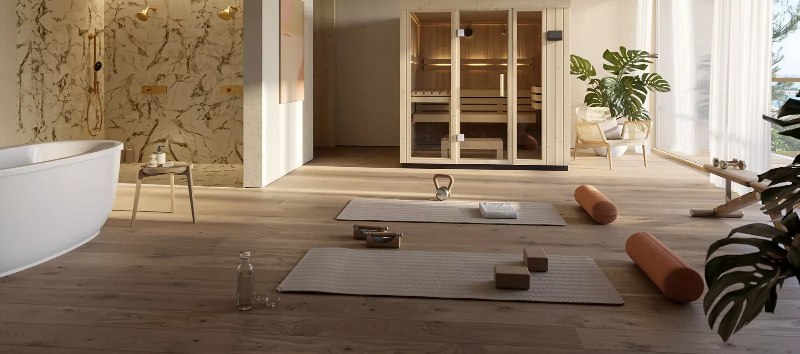
@Kohler