How a 1986 BMW 635CSi became the world’s most famous rolling artwork — and why it’s finally arriving in Asia.
“I think mobile museums would be a good idea. This car is the fulfilment of my dream.” — Robert Rauschenberg, 1986.
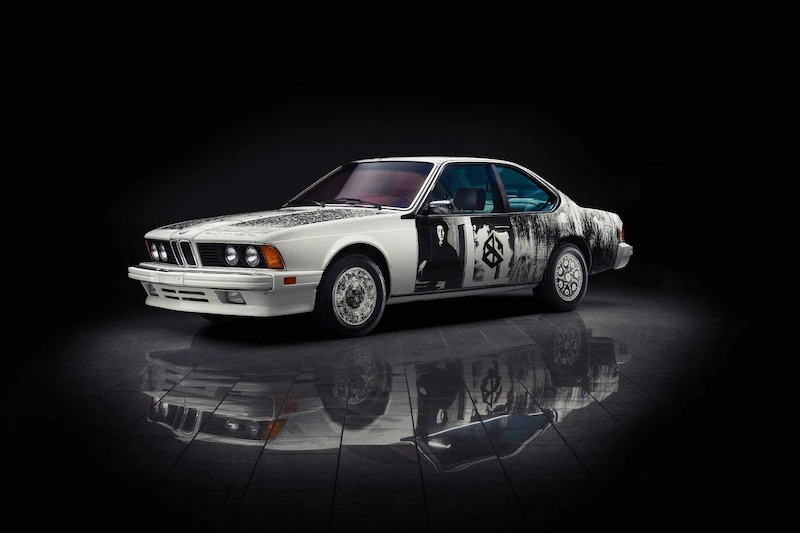
Imagine pulling up to a traffic light and realising the car next to you isn’t just a car. It’s a canvas. It’s a photograph. It’s a sculpture doing 100 km/h on the motorway. That’s the peculiar genius of the BMW Art Car Collection — and nobody embodied it more outrageously than Robert Rauschenberg, who turned a BMW 635CSi into one of the defining artworks of the 1980s.
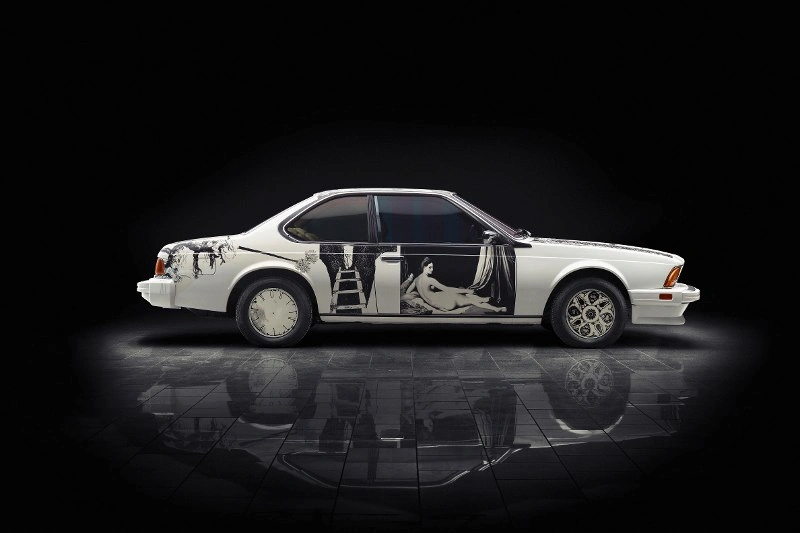
Now, nearly four decades later, Rauschenberg’s “drivable museum” made its Asian debut at Art Basel Hong Kong 2026 — timed, with exquisite precision, to the centennial year of the artist’s birth.
Why a car? Why Rauschenberg?
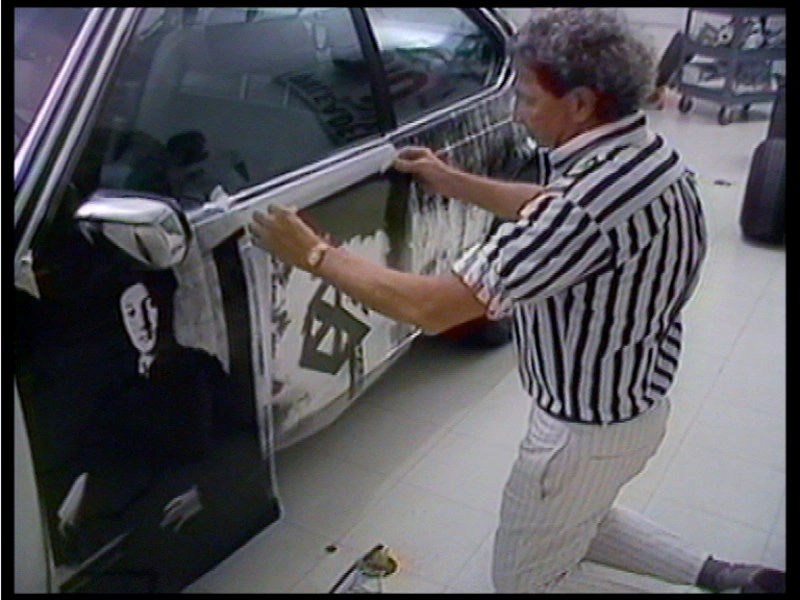
Rauschenberg was the original boundary-blurrer. Long before anyone used that phrase in a press release, he was fusing photographs, newspaper clippings, pop culture, and fine art into “Combines” — three-dimensional, multimedia works that refused to sit still in a single category. Give him a German sports car and, of course, he made it into a philosophical statement.
The 635CSi became a synthesis of his entire practice: layers of photographic imagery, smears of paint, and references to both art history and everyday American life, all applied to a machine designed for speed. The result is something that makes more sense in motion than standing still — exactly as Rauschenberg intended.
Described by the Robert Rauschenberg Foundation as a work that “blurs the boundaries between art and life, painting and sculpture, art and technology” — the Art Car distills 40 years of restless creative practice into roughly 14 feet of sleek Bavarian engineering.
The World Tour rolls into Hong Kong
As part of the BMW Art Car World Tour, the 635CSi lands at the BMW Lounge inside Art Basel Hong Kong 2026, where it shares space with a reproduction of Rauschenberg’s legendary Automobile Tire Print (1953) — a 22-foot-long work made by rolling a car tyre dipped in paint across joined sheets of paper. The circularity is delicious: a 1953 experiment in using a car as a printing tool, displayed beside a 1986 car transformed into a painting.
The Map to Modern Luxury
THE CURATED CALENDAR
Discover the world’s most prestigious gatherings & exhibitionsThe Automobile Tire Print — in which Rauschenberg asked John Cage to drive a Ford slowly over ink-soaked paper — anticipates the Art Car by more than 30 years. Both works ask the same question: what happens when a vehicle becomes the artist’s tool?
Why Art Cars? Why Now?
There’s something almost absurdly fun about the Art Car concept. BMW has been commissioning artists — from Alexander Calder to Andy Warhol, David Hockney to Jeff Koons — to transform production cars into gallery-worthy objects since 1975. The catch? These cars were actually raced. Calder’s 3.0 CSL competed at Le Mans the same year he painted it. Speed and paint, motorsport and modernism, all tangled up together on the same tarmac.
Rauschenberg’s, which never raced competitively, takes a different approach. It asks not “what does art look like going 200 mph?” but rather “what is a museum, really?” If art is meant to move people — emotionally, intellectually — why not move it literally? Why not take it out of the white cube and onto the street, where anyone might encounter it?
The Rauschenberg Art Car is also on show in parallel with Robert Rauschenberg and Asia at M+, Hong Kong’s landmark contemporary arts museum, running until 26 April 2026.
In 2026, as museums grapple with questions of access, relevance, and what it means to reach new audiences, a 40-year-old car feels urgently contemporary. Rauschenberg dreamed of mobile museums. You could argue the whole world is catching up.