Two luxury Italian houses, two cabinets, one trick. In both, the pleasure comes at the moment of opening the door.
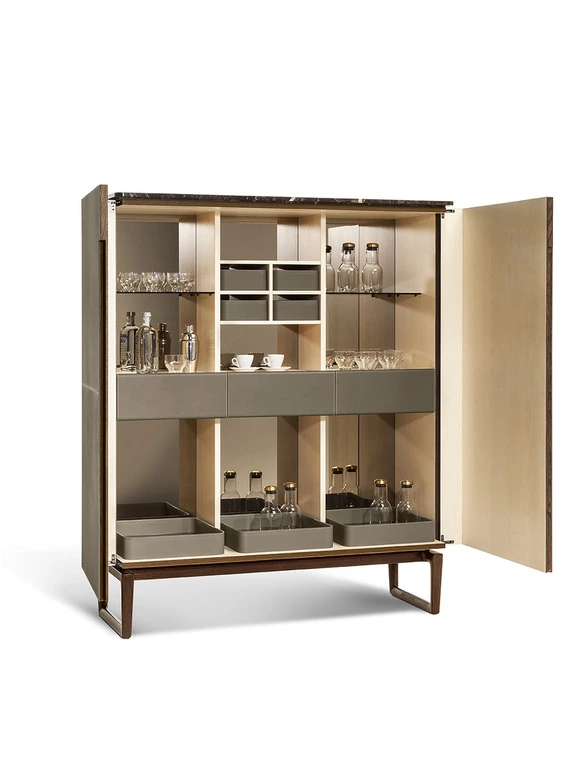
Poltrona Frau is the Italian leather-and-furniture house founded in Turin in 1912 by Renzo Frau, famous for its full-grain Pelle Frau leather. Its Fidelio drinks cabinet, designed by the Pisa-born architect and designer Roberto Lazzeroni, is an elegant bar in disguise. Fornasetti is the Milan house built on the surreal, hand-silkscreened surfaces of Piero Fornasetti. Its Architettura trumeau, a tall writing cabinet he designed with the architect Gio Ponti, has been the brand’s icon since 1951. One is a modern classic made for the art of welcoming. The other is a piece of theatre that costs €30,000 and is, at the time of writing, sold out in its US-wired version.
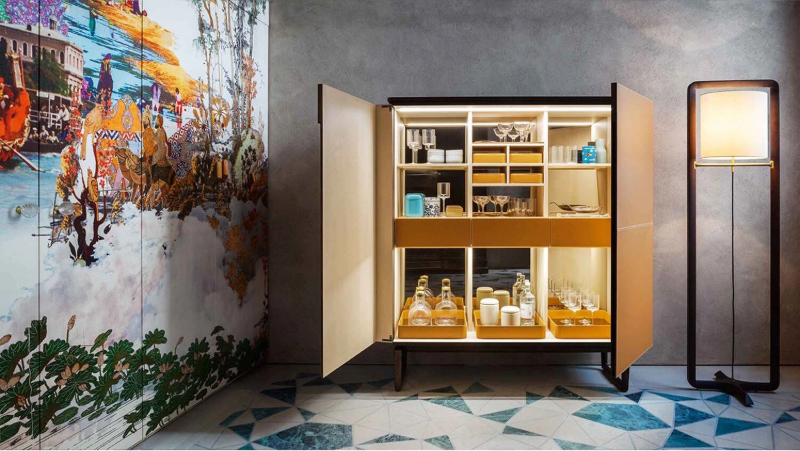
Poltrona Frau Fidelio: a bar that waits until you open it
Closed, the Poltrona Frau Fidelio is a calm, lean piece in saddle leather, ash and wood, with a single vertical line separating the doors and recessed handles. Open the doors and an LED light switches on to reveal a pale maple interior, two smoked-bronze mirrors at the back, crystal-glass shelves and leather-lined trays shaped for bottles. The structure is solid ash and birch plywood with a moka-coloured ash veneer, the top comes in ash or in marble (Calacatta oro, Emperador or Fior di Pesco), and the leather can be stitched tone-on-tone or in contrast. As the house describes it, Lazzeroni’s brief was a deliberately clean design in precious materials, with a warm, dark exterior contrasting with a light, luminous interior.
It is not a new design. Various listings date the Poltrona Frau Fidelio series to between 2016 and 2018, and Poltrona Frau has since extended it, including a multimedia cabinet made with the camera maker Leica. Its reappearance in the holiday conversation says something: the luxury company is pitching a classic as a gift to the art of hosting, not chasing novelty. Poltrona Frau itself calls the drinks cabinet an ideal home bar for a modern apartment, compact yet spacious. And it quietly fits a larger shift. After years of open shelving, a closed cabinet that hides the clutter and saves the best for guests has a certain appeal.
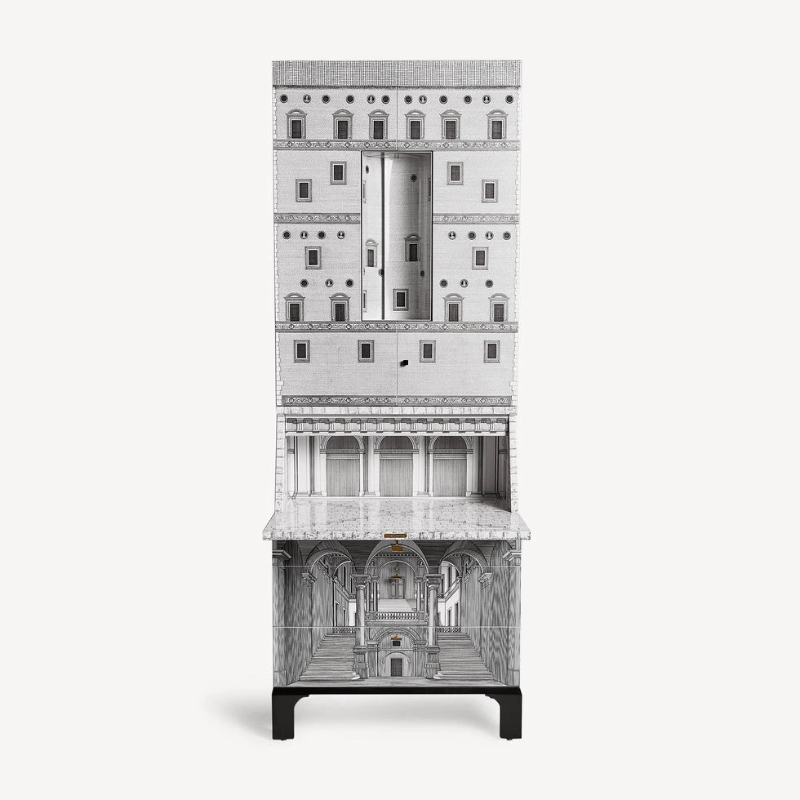
Fornasetti Trumeau: a hand-painted doorway to somewhere else
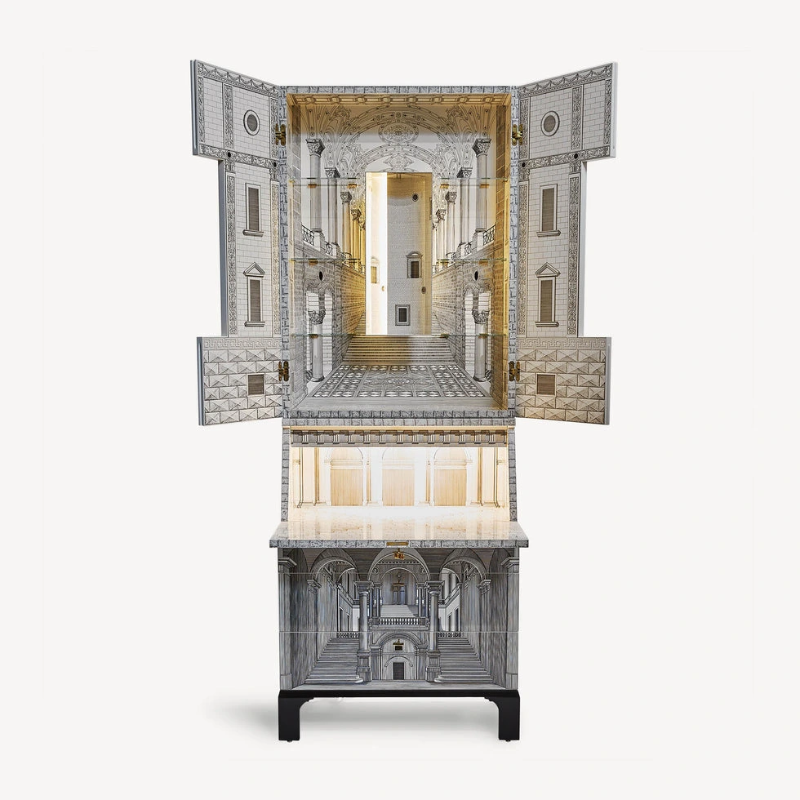
A trumeau, in French furniture, is a cabinet that combines drawers, doors and a fold-down writing surface. Fornasetti’s Trumeau Architettura version, hand-silkscreened and lacquered, has three drawers, a double door and a folding desk, and each opening reveals imaginary architecture, with lights in the recess and flap. The design house describes it as an icon of Italian artistic design still handcrafted in limited editions, and says the act of opening it becomes an encounter with a world within.
The details are delightful. It stands 219 centimetres tall, weighs about 100 kilograms and is made, the technical sheet says, of 95% MDF, 2% iron and 3% tempered glass. Read that again: a €30,000 piece of furniture is mostly medium-density fibreboard. The point is that the value lies in the drawing, the silkscreen, the lacquer and the hours of work, not in the wood. It is an honest reminder that in luxury design the material is often the cheapest part of the story.
Its cousin, the curved Fornasetti Palazzo cabinet, sits at €13,000, decorated with the façade of a sober neoclassical palace. Both come with the line that stocks are limited to allow for artisanal production times, and that small differences between pieces “attest to the uniqueness of each product.” That is a very polished way of turning the speed limit of handwork into a selling point. Scarcity here is partly real, since hand-silkscreening is slow, and partly a good piece of storytelling. A sold-out sign at €30,000 is persuasive either way.
The Map to Modern Luxury
THE CURATED CALENDAR
Discover the world’s most prestigious gatherings & exhibitions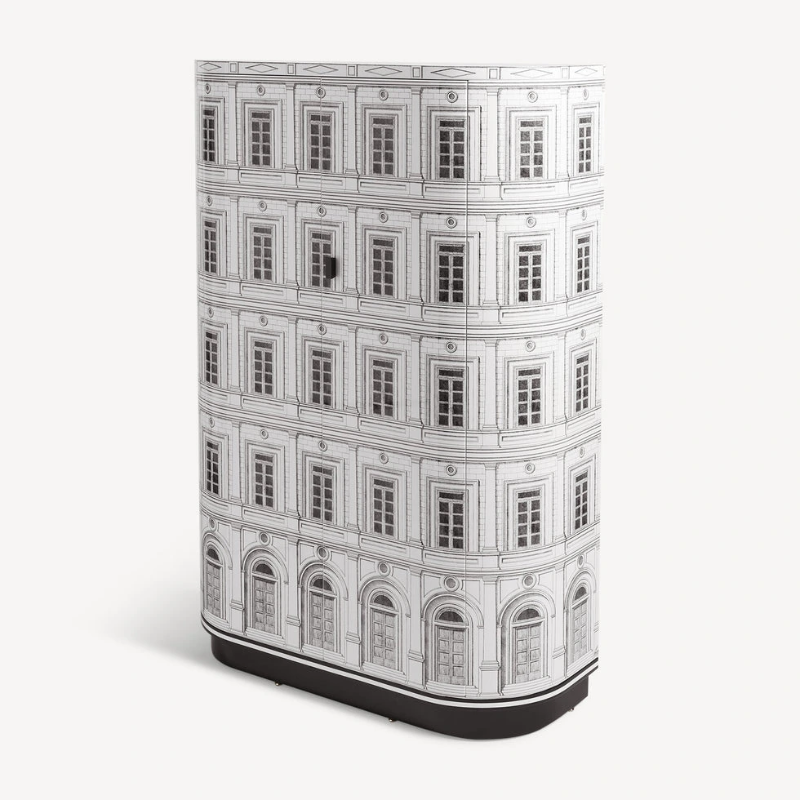
Between the lines
Reveal is the new flex. Open-plan living and floating shelves have dominated design for years. Both cabinets do the opposite: they keep the best part hidden until the right moment. We saw the same instinct in Chanel’s reversible medals this month, where the more intricate face lies against your skin. Luxury increasingly sells private discovery, not public display.
Craft is a time, not a thing. The Fidelio’s saddle leather and maple, and the Trumeau’s silkscreen, are about hours of skilled labour. When a 95%-MDF cabinet costs €30,000, you are paying for authorship, a design by Fornasetti and Ponti from 1951, and the slow hands that still produce it.
Hosting is back. A lit-up drinks cabinet is the furniture version of the trend we noticed in luxury backgammon sets: people want reasons to gather. Whether you pour a negroni or unfold a backgammon board, the real product is the evening.
A word of caution. Reissues and icons keep the market safe for houses, but they also lean on a single moment in design history. Poltrona Frau and Fornasetti have both found ways to refresh their codes, including with each other, as the Poltrona Frau storage range lists a Fornasetti collaboration. The next step is to prove that new pieces can be as memorable as the old.
Where to find them
Poltrona Frau sells through its own stores and retailers worldwide, with the Fidelio configurable in leathers, woods and tops. Fornasetti sells through its online store, which ships to countries including Italy, the US, Japan, Germany, the UK, China, France and Australia, and through its boutiques. Prices for Fidelio vary by configuration, so ask a retailer for a quote.