There is a particular kind of person who collects castles the way others collect watches. Sir Robert Worcester, the American-born founder of the polling firm MORI, was one of them. In 1996 he bought Allington Castle, a medieval fortress in Kent that had slipped into disrepair, and spent nearly three decades bringing it back. He died last year, aged 91, and the castle is now on the market through Knight Frank, the London property consultancy founded in 1896, at a guide price of £5 million, around $6.7 million.
What you would be buying
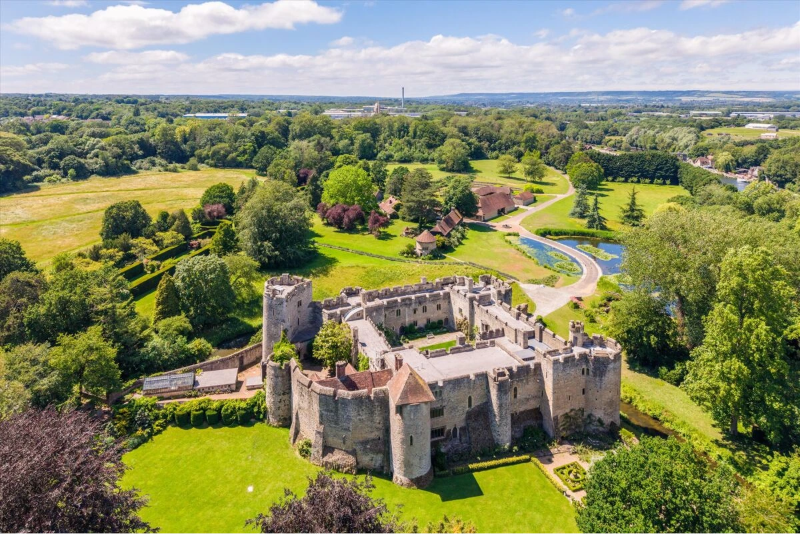
Allington sits on about 42 acres of woodland and riverside grounds on the Medway, roughly an hour south-east of London. The site appears in the Domesday Book of 1086. Listings describe a 12th-century origin, and local histories date the present fortified castle to the late 13th century, with Tudor chapters to follow: the poet Sir Thomas Wyatt was born here in 1503, and Henry VIII is said to have stayed in the Royal Room and dined in the Great Hall with Anne Boleyn. It is Grade I listed, the highest protection England gives.
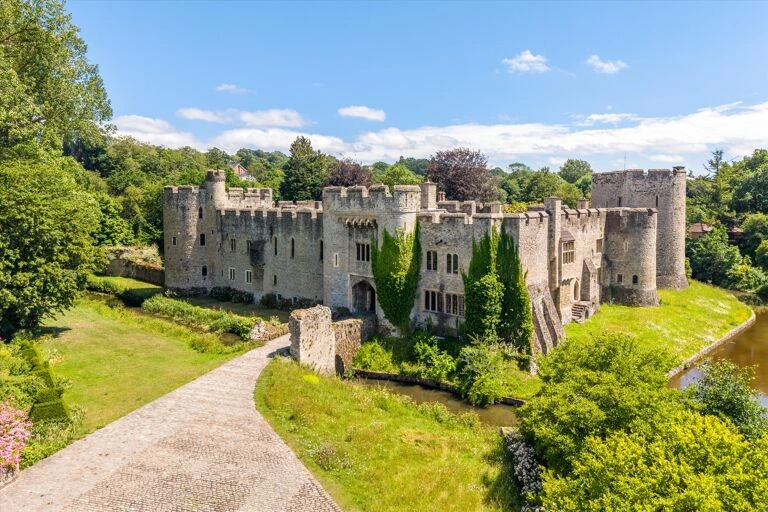
The castle has six towers, two inner courtyards, a full moat, a jousting yard, a secret staircase and a set of underground chambers called the Dog Caves, which probably housed hunting hounds. The grounds have formal gardens, a meadow, one of the oldest dovecotes in England and a tennis court. Inside there are thick stone walls, leaded glass, a long gallery, a library and a Great Hall that holds around 120 guests for weddings. Accounts of the accommodation vary, from “more than a dozen bedrooms” to a listing that cites up to 30, and nine separate lodgings share the estate. The indoor swimming pool is currently out of use, which is a polite way of saying that even castles have maintenance lists.
The building has had a colourful recent history. Sir Martin Conway, an art historian and later Lord Conway, placed an advertisement in The Times in 1905 asking for an old manor house or abbey, and within weeks he owned Allington. With the architect W. D. Caroe he restored the castle over more than two decades. Carmelite friars and nuns lived there for much of the late twentieth century, and then Worcester arrived and filled the rooms with antiques, books and furniture he had chased at auction and returned to their original home. The estate has also earned its keep as an events venue and as a filming location for the children’s series Horrible Histories.
The price, in perspective
£5 million is a startling number if you read it next to recent headlines. Earlier this autumn we wrote about a Gulf-front house at Seagrove Beach in Florida that changed hands for $24 million, a record for a no-homeowners’-association home on that coast. That house is a handsome 2019 build. Allington has been standing for about 700 years. On paper the castle costs roughly a quarter as much.
Context matters, of course. Beach-front land on the Gulf of Mexico and a listed monument in Kent are different assets with different markets, and a castle is not a turnkey purchase. The roof, the moat, the stonework and the gardens all require upkeep that most houses never imagine, and a Grade I listing means every alteration needs consent. Calling it a bargain would be glib. A better description is that it is priced for stewardship, not for display.
The Map to Modern Luxury
THE CURATED CALENDAR
Discover the world’s most prestigious gatherings & exhibitions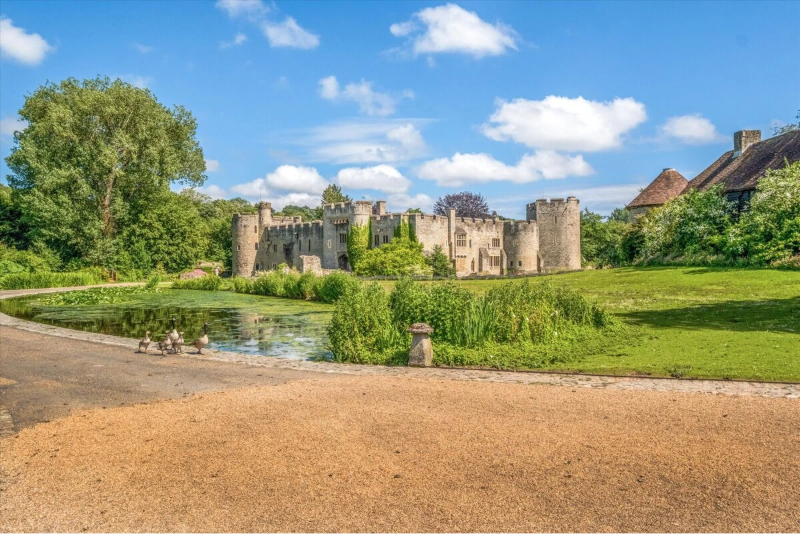
The castle as a business
What makes properties like this survivable is the way modern owners have learned to make them pay. A Great Hall that seats 120 is a wedding venue. A moat and a jousting yard are film sets. The pattern is familiar from the private houses Mandarin Oriental now rents out, such as a 12th-century fortress in Umbria, a restored monastery in Croatia and a Renaissance estate near Florence. Each treats history as an asset with an income, not just a cost. The Ritz-Carlton’s plans for the old Hotel Bossert in Brooklyn follow the same logic with a landmark building.
There is an interesting question about who these castles now suit. Knight Frank has a whole feature on castles for sale this season, and the buyers it describes are drawn not only by status but by story: the pleasure of becoming one more name in a long line of custodians. In a market where everything from watches to handbags is sold on provenance, a house with nine centuries of provenance is the ultimate collectable. It also has the rare advantage of being habitable.
A last thought
If you are tempted, a modest piece of advice from the sidelines: bring a surveyor, a conservation architect and a good sense of humour. Castles reward patience and punish impatience. Worcester seems to have known this, and gave the building three decades. The next custodian will need a similar sense of time, and a good rain jacket for the moat.
