A Milan court has ordered judicial administration for the parent companies of two prominent Italian fashion brands, Paul & Shark and Aspesi, following allegations of negligence in supplier oversight linked to labour exploitation.
The ruling adds both names to a growing list of luxury and premium fashion houses caught up in a widening Italian judicial investigation into subcontracting practices and working conditions across the country’s fashion supply chain.

THE LEGAL ACTION
Dama SpA, the parent company of Paul & Shark, and Alberto Aspesi & C. SpA have been placed under judicial administration by a Milan court, following a labour abuse case filed by prosecutors Daniela Bartolucci and Paolo Storari.
According to the prosecutors, both companies subcontracted a portion of their manufacturing to two Chinese-owned firms — Gmax 365 Srl and M&G Confezioni Srl — both based in Garbagnate Milanese, in the Milan suburbs. The subcontractors are alleged to have subjected workers to 14-hour shifts at below-standard pay, with reports of premises also being used as worker dormitories.
Under Italian law, judicial administration is a preventive legal measure rather than a criminal conviction. It allows the court to appoint an independent consultant tasked with helping the affected companies strengthen their supply chain auditing and implement adequate compliance mechanisms. The measure is intended as a corrective intervention, not a punitive one.
THE BRANDS’ RESPONSE
Aspesi has strongly contested the characterisation of events. In an official statement, the company said that inspections carried out at the supplier’s premises revealed no indication of regulatory non-compliance, and that it had no knowledge of the premises being used as dormitories or of the employment of irregular workers.
On the question of wages, Aspesi stated that the subcontractor had always been paid amounts it considered sufficient to ensure fair employee compensation, explicitly denying that the arrangement constituted worker exploitation under Article 603-bis of the Italian Criminal Code. The company added that it has instructed legal counsel to protect its interests and has made itself available to all relevant authorities.
Paul & Shark’s parent company, Dama SpA, has not issued a comparable public statement at the time of publication.
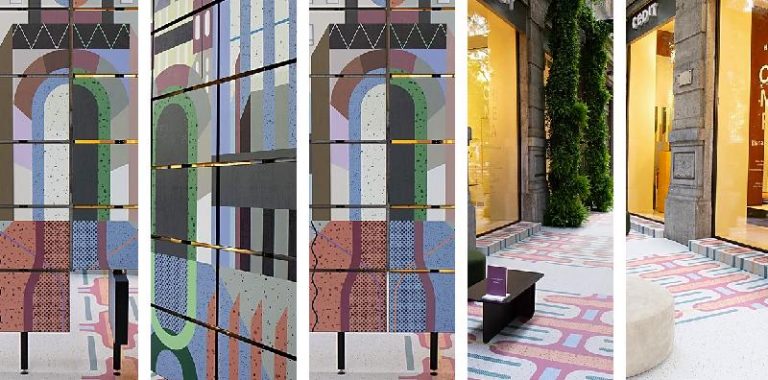
Hotel Chimera Capsule is one of the best new contributions to the Italian design scene this year
Find more hidden gems in our archiveTHE CURATED CALENDAR
Discover the world’s most prestigious gatherings & exhibitionsA BROADER INDUSTRY RECKONING
The cases of Paul & Shark and Aspesi are the latest in a series of judicial interventions that have sent shockwaves through Italy’s fashion industry. Milan prosecutors have previously uncovered alleged supply chain irregularities involving some of the sector’s most recognised names, including Tod’s, Loro Piana, Valentino, Dior, and Giorgio Armani.
All of the implicated brands have been placed under judicial administration to correct and improve their auditing procedures, with the exception of Tod’s, whose case has been transferred to an Ancona court, which has yet to rule. Tod’s and three of its managers are separately under investigation for suspected labour abuses, with prosecutors alleging the company disregarded findings from inspections of its subcontractors.
The recurring nature of these cases has prompted serious questions about the fashion industry’s capacity — and willingness — to maintain rigorous oversight of multi-tiered supply chains, particularly when subcontracting extends to smaller, less scrutinised operators.
ABOUT THE BRANDS
Paul & Shark, founded in 1975, is an Italian luxury sportswear brand with strong roots in yachting and sailing culture. Known for its high-performance technical fabrics and premium knitwear, it occupies a positioning comparable to brands such as Stone Island or Moncler, though with a more classic, seafaring aesthetic. While commanding luxury price points, it is generally considered accessible luxury rather than a traditional heritage house. The brand has recently moved toward a quieter, less logo-driven identity.
Aspesi, founded in 1969 by Alberto Aspesi and originally a shirtmaker, has cultivated a devoted following among the fashion-conscious for its understated minimalism and rigorous fabric research. Best known for its field jackets and technical nylon pieces, Aspesi carries no visible branding and is widely regarded as a benchmark of quiet Italian craftsmanship. It is, as its admirers often put it, a brand for those who already know.
WHAT COMES NEXT
Both companies are now required to work with court-appointed consultants to review and strengthen their supply chain compliance frameworks. The outcome of those processes, and any further developments in the broader prosecutorial investigation, will be closely watched by an industry already under significant pressure to demonstrate greater transparency and accountability in its manufacturing practices.