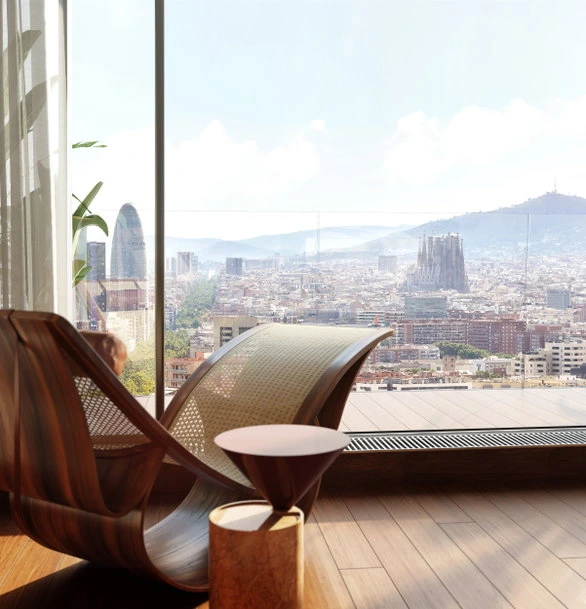
As fortunes rise across Central and Eastern Europe, a Mediterranean base is increasingly becoming high on wealthy individuals’ wish lists.
For a significant period of time, the map of European wealth had a short list of established addresses such as London, Paris, and Geneva. Now, that list is getting longer. Fortunes built over the past two decades in Warsaw, Bucharest, Sofia and Bratislava now sit alongside established wealth, and the people who hold them are asking a question their parents rarely had the freedom to ask: where, exactly, do I want to live? Increasingly, the answer is somewhere warmer, and the city of Barcelona in Spain is a name that keeps coming up first.
Indeed, according to UBS’s Global Wealth Report 2026 personal wealth in Eastern Europe grew by 28% in 2025 in dollar terms, the strongest of any region. Knight Frank’s Wealth Report 2026 also found that Poland’s ultra-wealthy population, those with at least $30 million, rose 109% between 2021 and 2026, from 1,442 to 3,017, making it the fastest growth among the 44 countries the report studied, with Romania close behind.
Why European wealth is on the move
The reasons Eastern European buyers are falling for Barcelona are practical as much as aspirational. EU freedom of movement means that those from EU member states like Poland, Romania, and Bulgaria can settle and buy property in Spain. Distance is no issue either. Barcelona-El Prat now links the city to 221 destinations across 66 countries with a record 57.5 million passengers in 2025. Add in a warm-year round climate, world-class education, and a luxury lifestyle by the sea, and it’s easy to see the appeal of Barcelona.
A warm, year-round climate
Barcelona enjoys around 2,500 hours of sun annually, according to AEMET data, and its winters are mild enough that terraces stay in use long after northern cities have moved indoors. Set that against the long grey season in Warsaw, Bratislava or Hamburg and the appeal needs little explanation. Life shifts outdoors, the sea is present in every month, and light becomes part of the quality of daily life rather than a feature of the holiday.
World-class education options
For families moving to Barcelona, the choice of international schools is wide: more than 40 in and around the city, teaching British, American, French, German and International Baccalaureate curricula. Several are long established. For example, the German School dates from 1894 and the Lycée Français from 1924 . Add universities and business schools with international reputations, and a city where English, Spanish, Catalan and French are heard every day, and a family can plan to spend most of the year here, not just the summer holidays.
A luxury lifestyle
Living in Barcelona also means mountains and sea within the same afternoon, a food scene that has become a reason to visit in itself, and a cultural calendar to match. Healthcare is world-class, international connections are excellent, and the city remains on a human scale. Compared with other luxury capitals, it is simply easier to live in.
The paradox: Operational luxury is the new scarcity
And yet Barcelona has a problem it rarely advertises. Most of its housing is old. The façades that draw people in are, to live behind, charming and demanding in equal measure: lifts squeezed into stairwells, shared systems of uncertain age, repairs that wait on a neighbours’ meeting, and parking that is scarce or absent.
The Map to Modern Luxury
THE CURATED CALENDAR
Discover the world’s most prestigious gatherings & exhibitionsWhat this new wealth wants above all is for everything to work seamlessly. In the world of luxury real estate this is increasingly referred to as operational luxury; the principle that a home is judged less by what it shows than by how reliably it runs.
In practice, the idea is concrete. A building managed on site, with a concierge at the door. A central climate system rather than a unit on every wall. Several lifts, so that one being serviced is not an event. Maintenance that is scheduled rather than discovered. And a home that can be shut up for weeks at a time without a second thought, which matters most to owners who divide their year between cities.
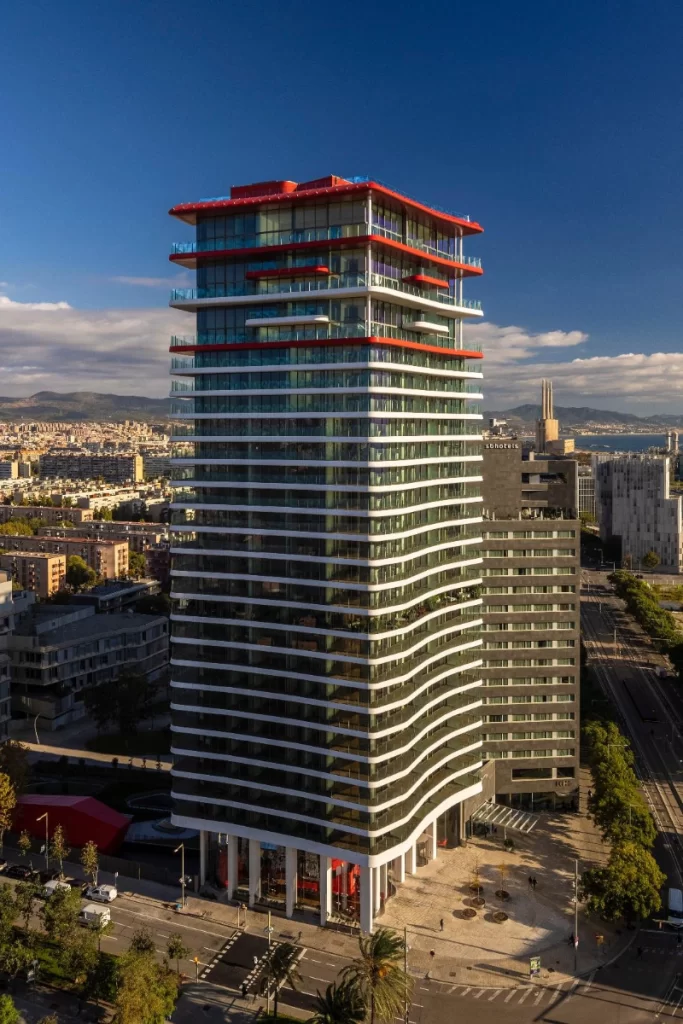
Luxury with sea views: Antares Barcelona
Luxury new-build in Barcelona is scarce to begin with, and almost none of it offers sea views.
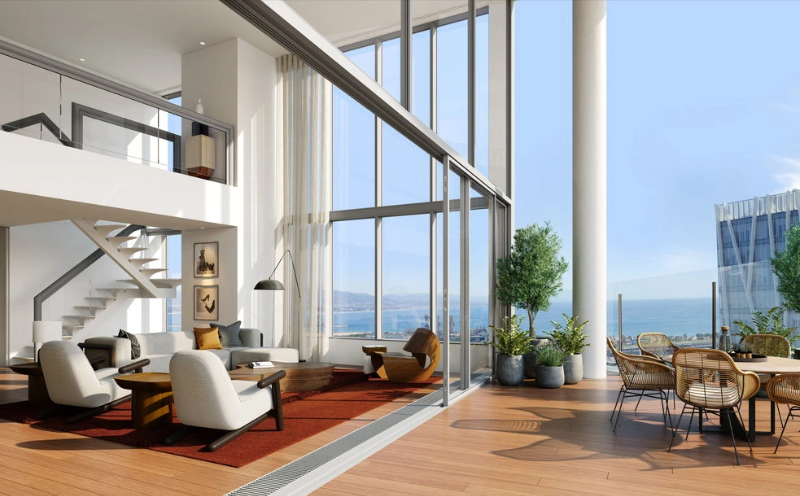
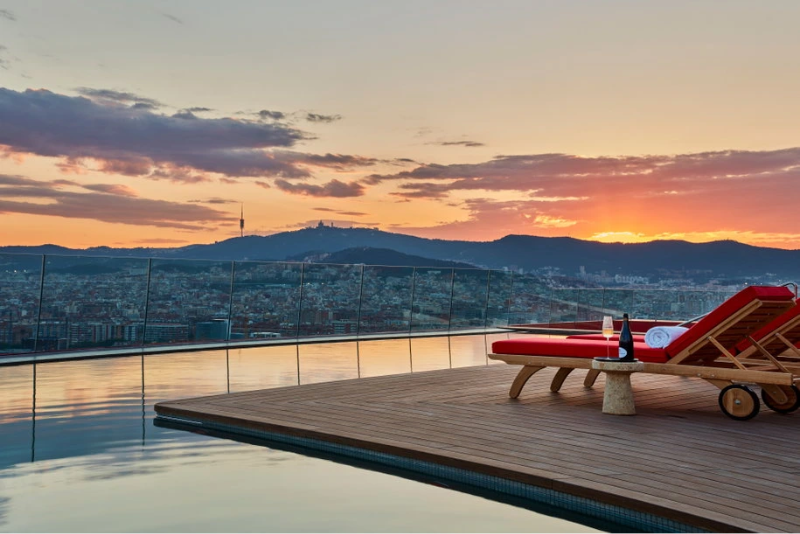
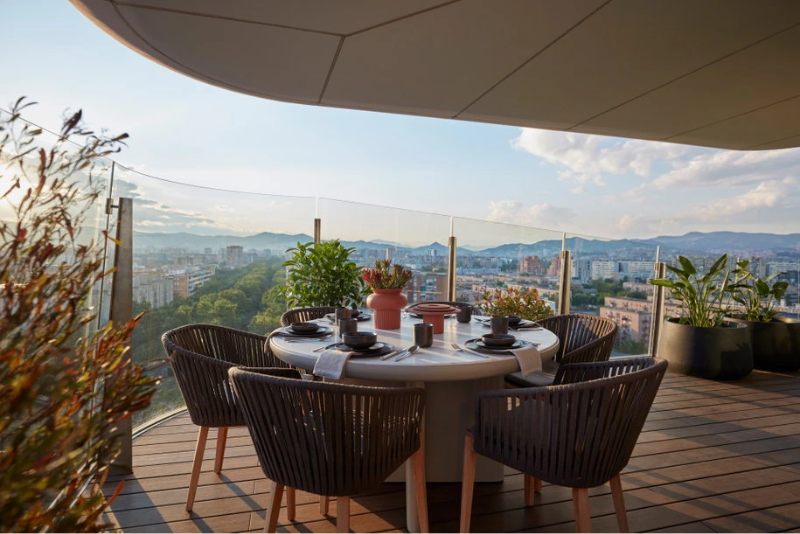
Antares, in Diagonal Mar, is Barcelona’s tallest residential tower. Built for modern-day living, this luxury residence offers exceptional views of the city of Barcelona, the Mediterranean Sea, and the mountains, all combined with superb operational luxury. Designed by Odile Decq, its 88 luxury apartments in Barcelona all benefit from a building that is run as carefully as it is designed: a concierge and building manager on site, four lifts, back-up generators and a technical team on call around the clock. It is a building arranged so that things simply work, and among seafront residences in Barcelona, nothing equivalent exists in the city.
Residences of this kind are rare, and every sale narrows the choice: a floor, an orientation, a view that can no longer be chosen. The new-construction luxury real estate market in Barcelona is moving fast, and supply is shrinking. For those who have settled on Barcelona, the question is no longer when to buy. It is what will still be available.