The clocks change, you finish work, and it is already dark. The run or the ride that felt easy in summer now feels like a chore, and the sofa looks very cosy. Many people stop outdoor exercise at this time of year, and then find it hard to start again when the days get longer. It does not have to be that way. A few changes to your schedule, your kit, and your eye comfort keep you active all winter. This guide covers how to plan around the light, how to see and be seen, what to wear, and how to build a habit that lasts. Pick the ideas that suit you, and protect one session this week. Most of the ideas are free, and each one is easy to try on a single session. Think of this guide as a menu, not a rule book.
Why Short Days Make It Harder to Stay Active
Less daylight, less drive
Low light can make it harder to get started. When you leave home in the dark and return in the dark, the day feels short, and your energy can dip. Many people notice that their mood and their motivation fall with the light. This is normal, and it is not a lack of willpower. Name the problem, and plan for it. A bright lamp at home, a podcast for the first mile, or a plan to meet a friend can all lift your drive on a dark day. Notice when your energy is best, and use that time. Some people feel sharper at lunch, others after work, and the right slot is the one that suits you. Do not compare your winter pace with your summer pace, because a slower session still counts. Treat the first week after the clocks change as a reset. Pick a new time, test it for a few days, and adjust. A new time can feel odd at first, and it often feels normal after a week or two.
Cold and wet weather
Rain and cold give easy excuses to skip a session. A wet pavement and a cold wind can look much worse from the sofa than they feel once you are on the move. Plan for each kind of weather in advance. Decide what you will do on a dry day, a wet day, and a very cold day, and write it down. A plan for each kind of weather removes the excuse, because the decision is already made. On the worst days, an indoor session is better than none. Check the forecast the night before, and lay out your kit so it is ready. A bag by the door, with a hat, gloves, and a light jacket, saves you a ten-minute hunt on the day. When the kit is ready, the first step is easier. Remember that you are only cold and wet for the first few minutes. Once you warm up, many people enjoy the weather more than they expected. A hot shower and a warm drink at home are a good reward for the effort.
A routine that slips
A change of clocks can break a good habit. If your usual time is suddenly dark, you may skip a few sessions, and then a few weeks pass. A small, fixed plan brings the habit back. Pick one or two days and a time that you can keep all winter, such as a lunch break on Tuesday and a weekend ride on Sunday. Put them in your diary like meetings, and the habit holds even when the weather is poor. Tell a friend or a colleague about your plan, because a promise to another person is hard to break. If you miss a session, do not wait for a new week to restart. Pick the next free slot and go, and the habit survives a bad day. A calendar reminder on your phone helps, and so does a set of kit by the door. Link the session to a task that you already do, such as the end of your last call or the time you get home. A cue turns a plan into an automatic step.
Plan Your Week Around the Light
Use the middle of the day
A lunch break outside is the brightest time of the day in winter. Even a short walk gives you daylight, fresh air, and a break from your desk. If you work from home, step out at midday for twenty minutes, and you may find that you work better in the afternoon. A walk counts as exercise, and it is free. If a full session is not possible, a brisk walk at lunch keeps the habit alive and your mood steady. If your lunch is busy, take a call on foot with headphones, as long as the call does not need a screen. Put a regular lunch walk in your diary, so it is as firm as any other task. Choose a route that you can cover in the time that you have, such as a loop round a park or a canal path. A loop means you are never far from the office or home. Take your phone, and set a gentle alarm for the time you must be back.
Check the sunrise and sunset times
Look up the sunrise and sunset times for your area, and plan your week around them. Use the hours of light for longer sessions, such as a long run, a ride, or a hike, and save short, easy sessions for the dark hours. A weekend session at midday often gives you the best light of the week. When you know the time of sunset, you can set a clear finish time and be home before it gets dark. In midwinter, sunset can come before the end of the work day, so plan your after-work session for a day when you can leave early, or move it to the weekend. Choose a route that you can finish in daylight when the dark hours start early. Many weather apps show these times at a glance. Check them on Sunday, and plan the week in one go. A fixed plan removes a daily decision.
Mix outdoor and indoor sessions
Keep one or two indoor sessions for bad days, such as a class, a gym visit, or a home workout. A mix keeps you active in any weather, and it takes the pressure off the outdoor days. You do not need to be outside every time. The aim is to stay active, and the place matters less than the habit. On a clear day, move the session outside, and on a stormy one, stay in. A home workout needs only a mat and a few minutes, so it suits the days when you cannot get out. A class at a local studio adds company and structure. Keep a short list of indoor options, so you can swap fast when the weather turns. Swap a run for a swim or a class when your legs feel heavy. Variety also keeps the plan fresh, and it makes winter feel shorter.
Keep Your Eyes Comfortable Outdoors
Low sun and glare
A low winter sun and wet roads or paths can dazzle you, especially at sunrise and sunset. Wraparound sunglasses help, and the NHS advises sunglasses with wraparound lenses or wide arms that carry the CE mark and the British Standard mark. Look After Your Eyes says that goggles and sunglasses can be made to any prescription, so you do not have to choose between a clear view and shade. A cap with a brim cuts glare from above and keeps rain off your lenses. Slow down when the sun is in your eyes, and watch your step. Check where the sun sits on your route, because a road that runs east or west can face the sun at its lowest. If you can choose, head the other way when the glare is strong, and turn back with the sun behind you. Keep your sunglasses clean, because smears scatter light and add to the glare. Wipe them before you set off, and again if they get splashed. If you ride a bike, check that your lenses fit under your helmet and do not catch on the straps.
Rain, mist, and fogged glasses
Glasses fog and collect rain drops in cold, wet weather. The mist forms when warm, humid air meets a cold lens, which can happen as you warm up on a run or when you step into a warm room. A cap with a brim keeps most of the rain off your lenses. Anti-fog wipes and a clean microfibre cloth help too, so keep both in your pocket. A strap keeps your frames in place when you sweat. Ask your optician about anti-fog options, and about frames that grip well. If your glasses fog when you stop, step out of the wind, and wipe them with a clean cloth. A small tube of anti-fog gel in your pocket takes no space, and it can save your session. Test any product at home first, so it does not smear on the day. A waterproof hat or a visor with a brim keeps rain off your frames. Wipe your lenses at each rest stop, and keep a dry cloth in a zip pocket. Rain on glasses blurs your view more at dusk, so slow down when the light drops.
Contact lenses as one option
Cold wind and dry air can leave your eyes dry, and many people find that contact lenses for dry eyes are a comfortable choice for outdoor exercise, because there are no frames to fog, slide, or catch the rain. They also give you a full view, and they fit easily under a cap or a helmet. Wind, cold, and dry air can bother some wearers, so carry a spare pair and your glasses as a back-up. Look After Your Eyes, the College of Optometrists’ patient site, advises you to wash and dry your hands before you touch your lenses, and it recommends back-up glasses, both for problems with your lenses and to give your eyes a rest. It also advises you not to shower or swim in your lenses. Sunglasses sit well over lenses on a bright day. Your optician can check the fit and suggest a type that suits your sport. Try lenses on a short, easy session first, so you know how they feel in the wind. Carry your case and a small bottle of solution in your pack for a long day outdoors, and keep your hands clean when you handle them. If your eyes feel dry or sore after a session, take your lenses out and switch to your glasses. Give your eyes a rest before the next session. The NHS says to ask for an urgent GP appointment or get help from NHS 111 if your eye is painful and red, or if you have a red eye and wear contact lenses, because you could have an eye infection.
Be Seen and See Clearly
Reflective kit and lights
A reflective kit and a small light make you easy to see. The Highway Code says that when it is dark, pedestrians should use reflective materials, which drivers with headlights can see up to three times as far away as non-reflective materials. For cyclists, the Highway Code says that at night your cycle must have white front and red rear lights lit. Carry a torch or a head torch for dark paths, so you can see the ground as well as be seen. Put the light on before you leave, and check that it works, because a dead battery is easy to avoid. A clip-on light on your jacket or your bag gives a good view from behind. Wash your reflective kit when it gets dirty, because dirt cuts how well it shines back. Wear your reflective kit on the outside, not under a jacket where it is hidden. Choose bright colours for daytime and reflective trim for the dark. Add a second light to the back of your bag if you often finish after sunset.
Choose well-lit routes
Pick familiar routes with street lights, especially when you exercise after work. A well-lit route is easier to see and safer for you. Avoid quiet, dark paths on your own, and tell someone where you plan to go and when you expect to be back. If you like to explore, do it at the weekend in daylight, and keep the dark hours for the routes that you know well. Share your route with a friend or a family member through a phone app, if you are comfortable with that. Carry your phone, and keep it charged. If a path feels unsafe, trust your instinct, turn back, and choose another route. Walk or ride your route once in daylight to learn the surface, the bends, and the crossings. Note where the lights are weak, and plan to slow down there. A route that you know well is safer on a dark night.
Slow down on wet ground
Leaves, mud, and wet stones are slippery. A shorter stride and a slower pace help you stay on your feet, and you can still keep your heart rate up. Watch the ground ahead as well as the path, and take care on bridges, kerbs, and steps. If a surface looks very wet or icy, switch to a safer route or an indoor session. A slip can end a season of good habits. On steep ground, shorten your stride and keep your feet under you. Keep off wet leaves, painted road lines, and metal covers, which can be slippery. Warm up your ankles before the session, and take your time on the way down. Look a few steps ahead, and lift your feet a little more than usual on uneven ground. Take extra care on the first wet day after a dry spell, when oil and dust can make a surface slick.
Dress for the Weather
Layers that you can add or remove
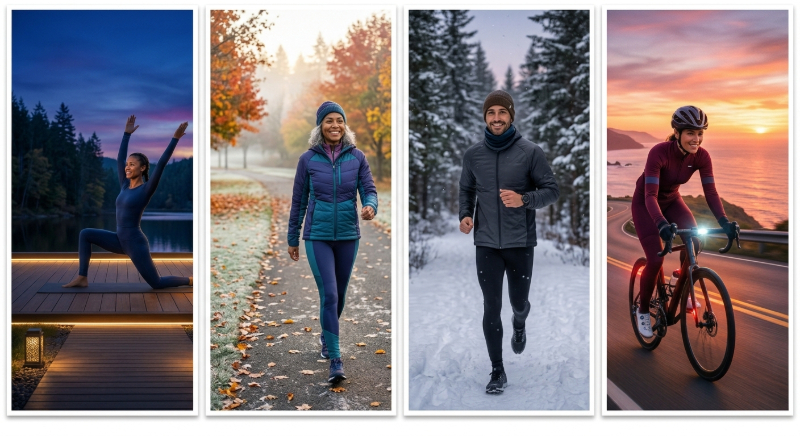
A thin base layer, a mid layer, and a light shell cover most winter weather. The base layer keeps sweat away from your skin, the mid layer holds heat, and the shell blocks wind and rain. Peel a layer off as you warm up, and put it back on when you stop. You should feel a little cool when you start, because you warm up fast. A small pack or a waist belt carries the layer that you take off. Choose fabrics that dry fast and feel soft on the skin, because wet cotton feels cold. Zip a layer halfway to let heat out before you take it off. A thin, packable jacket in a small pouch is useful on a day when the weather may turn. On a very cold day, add a thin second layer under your jacket, and keep your core warm. If you sweat a lot, carry a spare top for the end of the session. Dry clothes are one of the best comforts after a cold, wet session.
The Map to Modern Luxury
THE CURATED CALENDAR
Discover the world’s most prestigious gatherings & exhibitionsShoes with grip
Choose soles with a good grip for wet ground, and check them before the season starts. Replace your shoes when the tread wears down, because smooth soles slip on leaves and wet stone. Trail shoes help on muddy paths, and road shoes suit the pavement. If you are not sure what suits you, ask for advice at a good sports shop. A good pair of shoes is the best safety item that you can buy. Do a quick test on a wet surface at home, such as a damp path, before a long session. Socks matter too, because wet feet get cold fast. Keep a spare pair in your bag for after the session, so you can change into dry socks at once. Rotate two pairs if you can, because shoes need time to dry between sessions. Stuff wet shoes with paper, and keep them away from direct heat, which can harm some materials. A dry pair feels better and lasts longer.
Hands, head, and ears
A hat, gloves, and a neck warmer keep you warm, and they take almost no space. Your hands and ears feel the cold first, so protect them early. Thin gloves work for most days, and thicker ones suit very cold days. Small items fit in a pocket, so you can add them for the warm-up and the cool-down and take them off at the peak of the session. A warm body is easier to motivate. Wear a headband or a hat that covers your ears, and a thin neck warmer that you can pull up over your nose in the wind. Sunglasses sit well with a hat, and the brim adds shade. Check that your hat does not press on the arms of your glasses. Mittens are warmer than gloves on a very cold day, and a thin liner glove under them gives you a choice. Keep a spare pair of gloves in your bag, because wet gloves get cold fast. A warm head and warm hands make a cold session much easier to enjoy.
Make It a Habit
Start small
Ten minutes a day is a good start. The NHS guidelines for adults suggest at least 150 minutes of moderate intensity activity a week, or 75 minutes of vigorous activity, spread over 4 to 5 days or every day. You do not need to reach that target at once. Start with what feels easy, and add time when it feels comfortable. A short session that you finish builds confidence, and confidence builds the habit. Set a timer for ten minutes, and promise yourself that you can stop when it rings. Many people go on for longer once they start, and the first ten minutes are the hardest. Keep a log of your sessions, and you will see your progress at once. Choose a session that feels almost too easy, and finish it with energy to spare. A small success is better than a big failure. After two weeks, add five minutes, and see how it feels.
Find a partner or a group
A shared plan is hard to skip. A friend who waits at the door on a cold night gives you a reason to go out, and you do the same for them. A club or a group adds fun and safety, and it gives you a regular time. Look for a local club for your sport, or ask a colleague to join you at lunch. The company turns a chore into a social event. If you cannot find a group, join an online challenge or a local park event, and share your progress with a friend. A group can also keep you safe on a dark route, because there is always someone nearby. Agree on a time and a place the day before, and carry a spare light for a friend who forgets one. A good partner is someone with a similar pace, so neither of you feels held back or rushed. Agree to text each other at the same time on session days. Even a short message keeps the habit alive on a day when you feel flat.
Reward yourself
Treat yourself to a new kit, a favourite playlist, or a long, hot bath after a session. Rewards help a habit stick, because your brain links the effort with the pleasure that follows. Choose a reward that you enjoy and can repeat. Keep a small tally of sessions, and treat yourself when you reach a goal, such as ten sessions in a month. Small rewards keep you active when the weather is poor. Plan a bigger reward for the end of the month, such as a new pair of gloves, a day out, or a massage. Tell a friend about the goal, so they can cheer you on. Choose a reward that makes you want to go out again. Share a photo of your route with a friend, or add a star to a wall chart. Small, visible wins feel good, and they build the habit. If a reward costs money, set a small budget, so the habit stays easy to keep.
Look After Your Body and Mood
Warm up and cool down
A few minutes of gentle moves prepare the body in cold weather. Walk briskly, loosen your arms, and do some easy leg lifts before you pick up the pace. A short cool-down helps you recover, so slow down for the last few minutes and stretch while you are still warm. Put on a dry layer soon after you finish, because you cool fast once you stop. Warm up inside before you go out if it is very cold, with a few minutes of squats and arm circles. This saves you from a cold start, when your muscles feel stiff. After the session, change out of the damp kit as soon as you can, and drink some water. A cool-down also gives you time to check how your body feels. Note any tight spots, and give them extra care that night. A few minutes of gentle moves can ease a stiff back or tight legs.
Get daylight when you can
The NHS advises people with seasonal low moods to get as much natural daylight as you can, to go outside in the daytime every day, and to take regular exercise. A walk or a ride at lunch does all three. Daylight and exercise go well together, so a lunch walk gives you a double benefit. If your mood stays low for a long time, speak to your GP. Plan a short pause outside even on a busy day, such as five minutes by a window or in a garden. Even a few minutes outside add up over a week. A daily habit of daylight and exercise is a good way to protect your mood through the winter. Plan one longer outdoor session a week in the brightest hours, such as a weekend walk at midday. Invite a friend, and make it a social habit. A regular time in the open air gives the week a good anchor.
Rest and sleep
Rest days help the body recover. A hard session needs an easy day after it, and a good plan includes at least one day off each week. A regular sleep routine helps you feel fresh for the next session, so go to bed and get up at similar times. Sleep is where your body repairs itself, and it is also where motivation returns. Treat rest as part of the plan, not as a gap in it. Aim for the amount of sleep that leaves you alert the next day. Keep your bedroom dark and cool, and switch off screens before bed. If you feel tired all the time, check that you do not do too much, and ask your doctor if it lasts. Notice your body’s signals, such as heavy legs or a poor mood, because they can mean that you need an extra rest day. A day off does not undo your progress. It is part of how you get stronger.
Know When to Slow Down or Get Advice
Listen to your body
Stop if you feel sharp pain, dizziness, or chest discomfort, and get medical help if it does not pass. Rest when you are ill, and return slowly when you feel better. Cold air can make a cough or a tight chest feel worse, so ease off on very cold days. A rest day is not a failure. It is part of a good plan. Keep a note of any pain that returns, and tell your doctor or a physio. Do not push through an old injury, because it may get worse. Ease back with shorter sessions, and build up again as you heal. A cough, a cold, or a sore throat can make hard exercise a poor idea, so ease off until you feel better. Gentle walks are often fine, but rest is better if you have a fever. If you are not sure, ask a pharmacist or your doctor for advice.
Talk to your doctor before a big change
The NHS says to speak to your GP first if you have not exercised for some time, or if you have medical conditions or concerns. A short chat gives you a safe plan, and it helps you set a sensible goal. Mention any medicine that you take, and any joint problems. Your doctor can also suggest the best way to build up your activity over the winter. Ask about the best type of activity for you, and about how to build up. Tell your doctor about any chest or lung problem, because cold air can affect it. A clear, simple plan helps you start with confidence and carry on. Take a short list of questions, and write down the answers. Ask what signs to watch for, and when to stop. A plan that you understand is a plan that you can follow with confidence.
Book an eye test
A test checks that your sight suits low light and glare, and it checks the health of your eyes. Book it as often as your optician advises. Tell your optician which sport you do and when, so they can suggest sunglasses, sports eyewear, or lenses that suit your routine. Clear sight helps you spot roots, kerbs, and cyclists in poor light. Take your sports glasses and your sunglasses to the test, so your optician can check them. Ask whether a type of lens would help on dark roads, such as an anti-reflective treatment. A short chat can save you a lot of strain on the road and the path. Mention any glare, halos around lights, or trouble in low light, because these can be signs that your prescription needs a change. If your sight changes suddenly, do not wait for your next routine test, and get advice at once.
The Bottom Line
The days are short, but winter is full of crisp, clear air and good light at midday. A plan for each kind of weather, kit that keeps you warm and visible, and comfortable eyes make outdoor exercise easy to keep up. Pick one session to protect this week, and add another when it feels easy. By the time the days get longer, you will have a habit that carries you into the new season, and you will be fitter and brighter for it. Be patient with yourself. Some weeks will be better than others, and that is fine. Every session you do outside in winter is a win, and it builds the habit that carries you through the year. You do not need to do it all at once. A few small habits, added one at a time, carry you from the first dark night to the first long, light days.
